Concrete Walkways & Sidewalks in Casper: Cost, Design & Permits
If you're planning a new walkway or replacing concrete around your property, cost is probably one of your first questions. For early budgeting, a typical concrete walkway cost in Casper can often be estimated at roughly $7 to $17 per square foot for a standard installation. Decorative finishes, demolition, difficult access, drainage work, and other site conditions can push the price higher.
That means a simple 200-square-foot walkway may fall around $1,400 to $3,400 as a general planning range. This is not a fixed local quote. The final price depends on what needs to happen before the concrete is poured, the finish you choose, the layout, and the conditions around your property.
Casper weather should also be part of the planning process. Exterior concrete has to deal with freezing temperatures, snow, moisture, and seasonal temperature changes. A walkway that is properly planned for the site will generally perform better than one designed around price alone.
This guide covers concrete walkway costs in Casper, popular design options, finish choices, local permit considerations, and the questions worth asking before you hire a contractor.
How Much Does a Concrete Walkway Cost in Casper, WY?
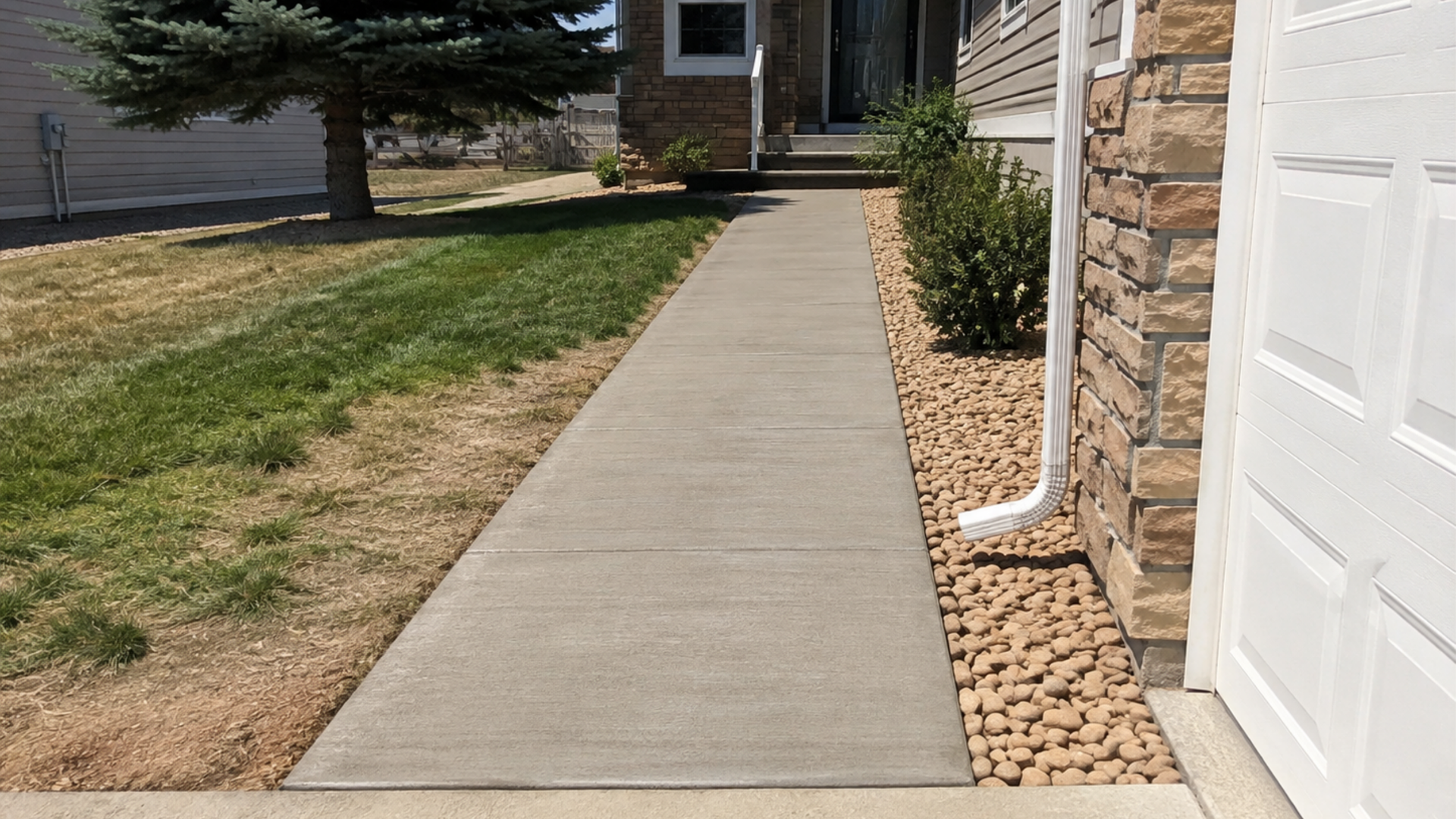
A useful starting point for a standard concrete walkway is approximately $7 to $17 per square foot installed.
Basic broom-finished concrete will generally fall toward the lower end of that range. Decorative finishes, more complicated layouts, existing concrete removal, and heavier site preparation can move the project toward the higher end or beyond it.
Here are some general planning ranges:
| Walkway Project | General Planning Range |
|---|---|
| Basic broom-finished walkway | $7–$12 per sq. ft. |
| Decorative or colored walkway | $12–$17+ per sq. ft. |
| Stamped concrete walkway | $10–$21+ per sq. ft. |
| Remove and replace existing sidewalk | $10–$25+ per sq. ft. |
These numbers should be used for budgeting rather than as a final project quote.
For example, a walkway that is 4 feet wide and 50 feet long contains about 200 square feet. At $7 to $17 per square foot, an early budget could be around $1,400 to $3,400 before additional demolition, grading, access issues, or decorative work are considered.
Smaller projects may also have a higher cost per square foot. Even a short walkway still requires crews to bring equipment to the property, prepare the area, set forms, order concrete, complete the finish, and clean up after the pour.
The most accurate way to price a walkway is to have the site reviewed in person.
What Changes the Cost of a Concrete Walkway?
Square footage matters, but it is only one part of the estimate. Two walkways with the same dimensions can have very different costs depending on what is happening around and beneath the concrete.
Existing Concrete Removal
Replacing an existing sidewalk usually costs more than installing a walkway in an open area. The old slab has to be broken up, removed, loaded, hauled away, and properly disposed of before the new walkway can be prepared.
Removal becomes more involved when the existing concrete is thick, reinforced, difficult to access, or surrounded by landscaping and structures that need to be protected.
Excavation and Base Preparation
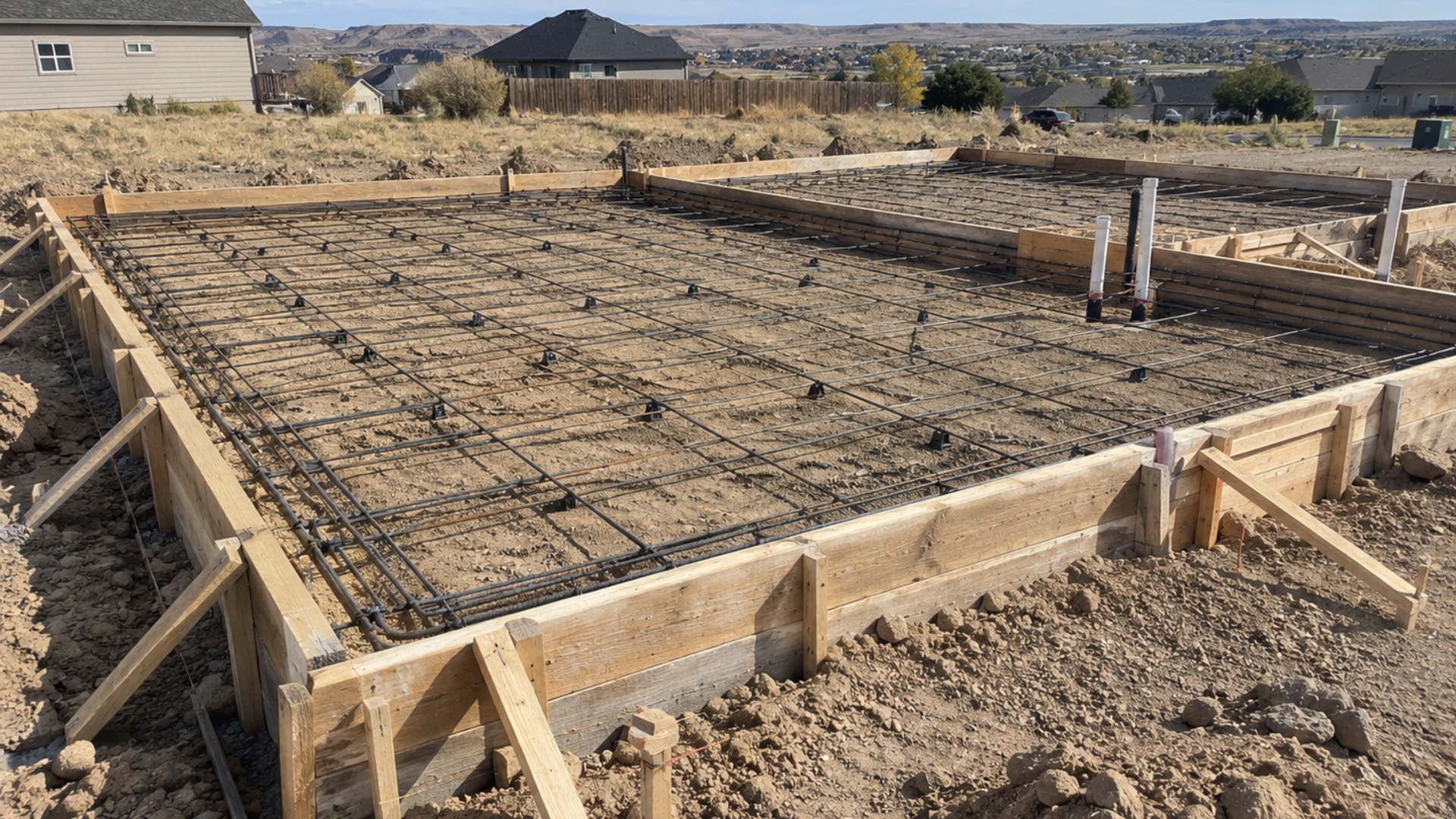
The ground beneath the walkway has a direct effect on the project. Depending on the property, the area may need excavation, grading, compacted aggregate, or correction of soft and unstable areas.
If the existing ground is uneven or poorly prepared, additional work may be necessary before concrete placement begins.
For Casper properties, this step deserves particular attention because exterior concrete will experience repeated freezing and thawing conditions.
Walkway Width and Length
More square footage means more concrete, forms, base material, labor, and finishing time. The right width also depends on how the walkway will be used.
A narrow garden path may only need room for one person. A front entrance walkway often benefits from extra width so two people can comfortably walk side by side.
Commercial and accessible walkways can have different dimensional requirements.
Curves and Custom Layouts
Straight concrete walkways are usually simpler to form than curved designs. Curves, widened entry sections, landings, borders, and transitions between different surfaces require additional layout and forming work.
The extra cost can be worthwhile when the design works better with the home and landscaping, but these details should be considered during the budgeting stage.
Drainage and Slope
A new walkway should not create a water problem. If the existing grade sends water toward the home, garage, foundation, or another low area, adjustments may be needed before the concrete is installed.
The contractor also needs to consider how water will move where the walkway connects with a driveway, patio, steps, landscaping, or public sidewalk.
Correcting drainage during installation is much easier than trying to fix it once the concrete is already in place.
Reinforcement and Project Requirements
Not every walkway is built for the same use. A residential path through a backyard may have different requirements than a busy commercial sidewalk or accessible route.
The contractor should determine whether reinforcement or other project-specific details are appropriate based on the intended use and site conditions.
Finish Selection
The finish you choose can make a noticeable difference in price. A standard gray broom finish is generally the most straightforward option. Colored concrete, stamped patterns, decorative borders, and exposed aggregate require additional materials and labor.
If you're interested in something more decorative, Full Contact Concrete also offers
stamped and colored concrete in Casper for walkways, patios, entrances, and other exterior surfaces.
Choosing the Right Concrete Walkway Design
The best walkway design is not necessarily the most decorative one.
A walkway should first make it easier to move around the property. Once the route, width, and function make sense, the appearance can be designed around the home and landscaping.
Here are several common options for Casper properties.
Straight Walkways
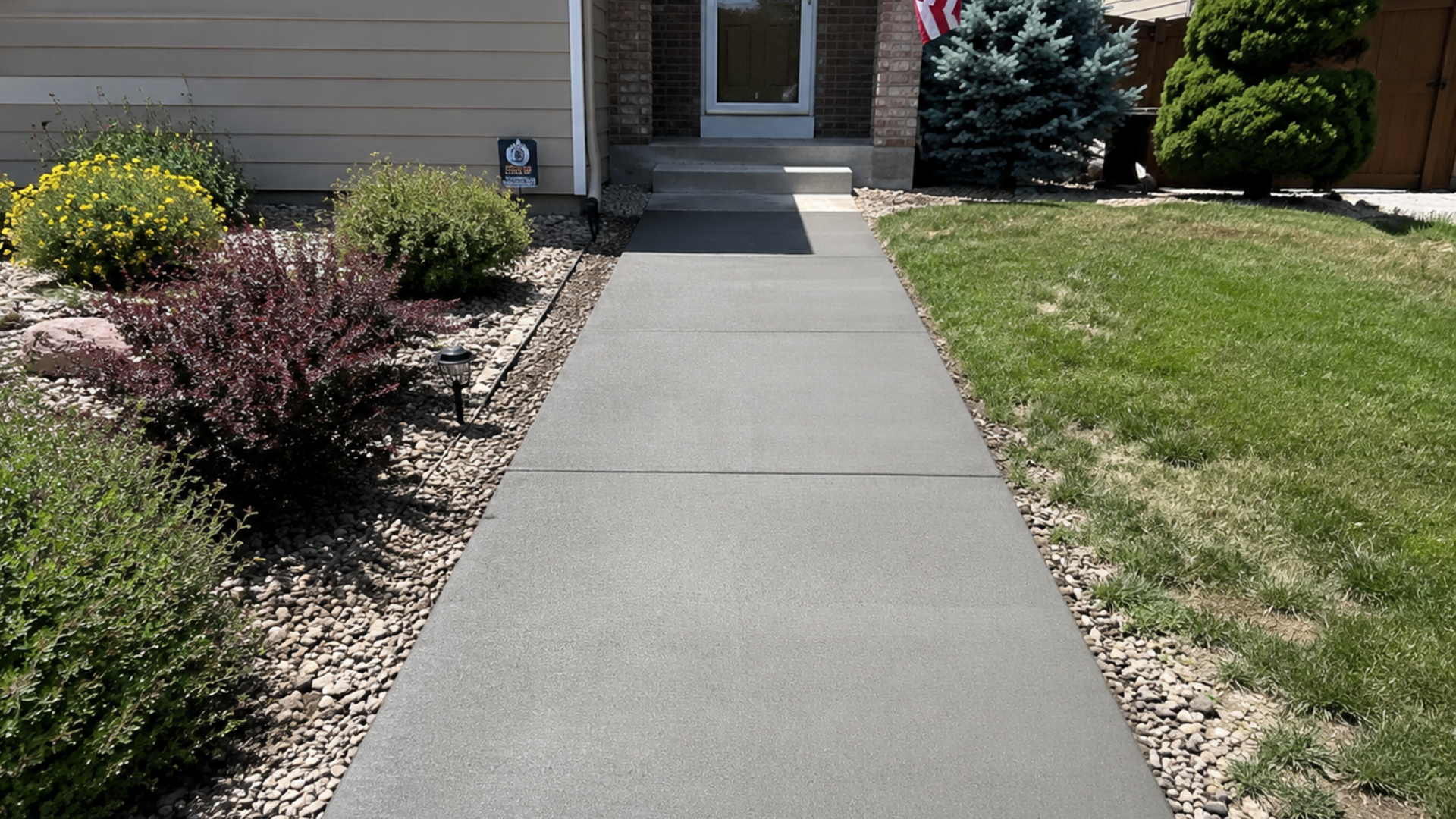
Straight concrete walkways are practical when there is a clear route between two areas.
They work especially well between:
- A driveway and front entrance
- A public sidewalk and front door
- A garage and backyard
- A parking area and commercial entrance
- Two buildings on the same property
A straight layout keeps the route direct and usually requires less complicated forming than a curved walkway.
For many properties, simplicity is an advantage. A clean walkway can improve the appearance of an entrance without becoming the main visual feature of the yard.
Curved Walkways
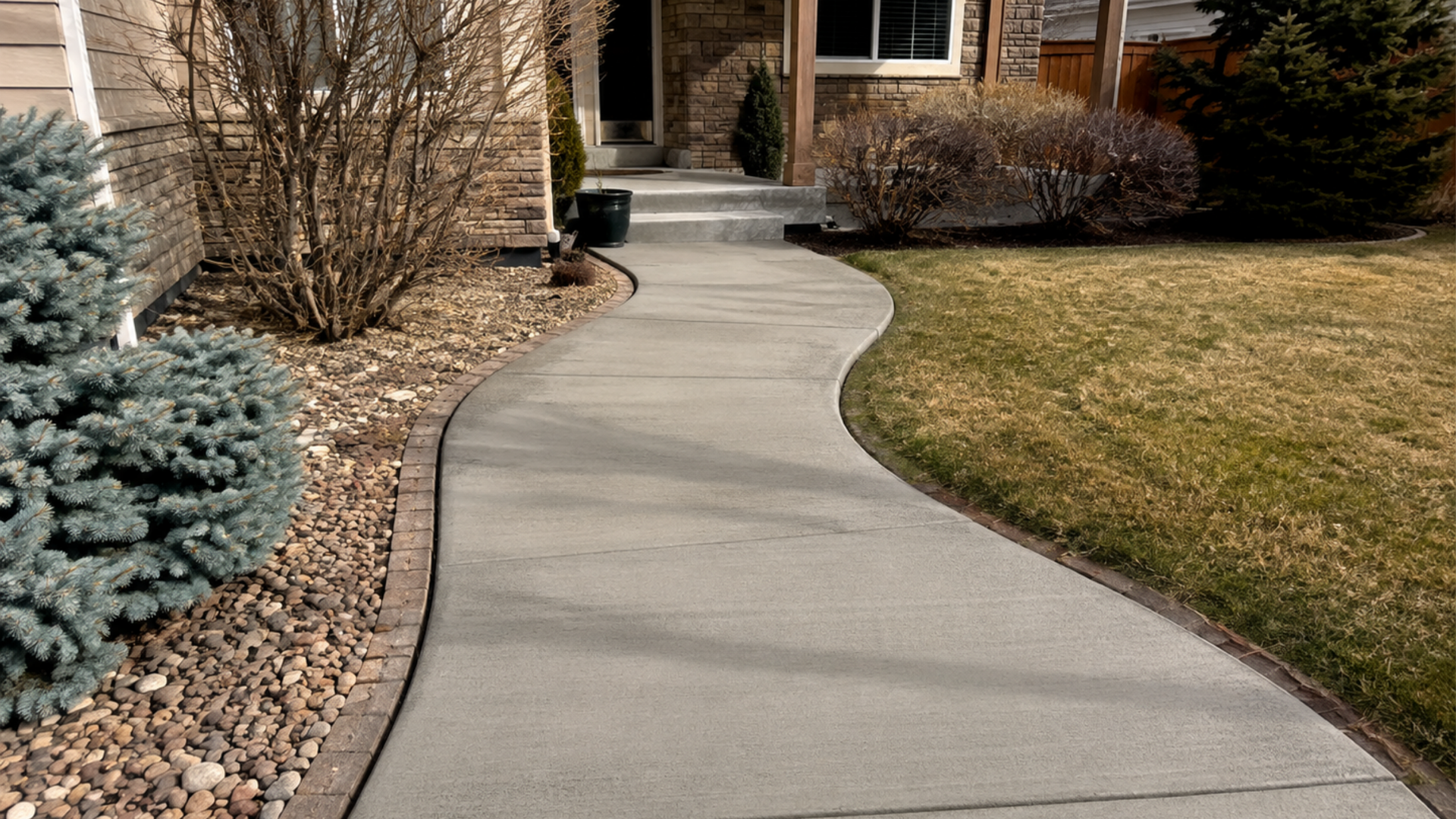
Curved walkways work well when the path needs to move around landscaping or when a softer layout fits the property better.
They are commonly used around:
- Planting beds
- Trees
- Retaining walls
- Garden areas
- Sloped yards
- Patio spaces
A curve can make a residential walkway feel more natural within the landscape, but it should still provide a practical route.
If the walkway curves too far away from where people actually want to walk, homeowners may eventually notice people cutting across the grass instead.
The best curved designs balance appearance with convenience.
Wider Front Entry Walkways
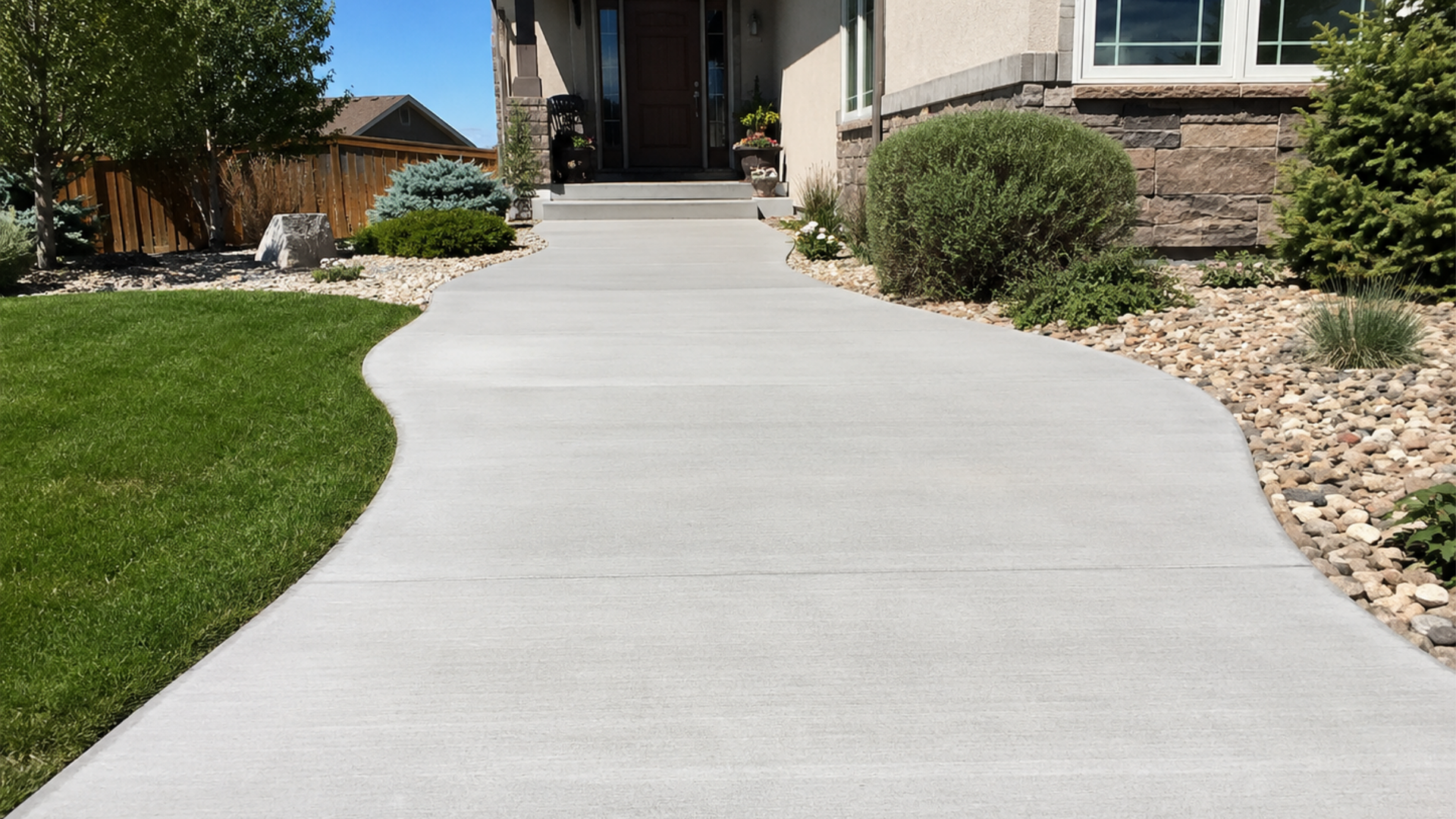
A narrow path can work perfectly well along the side of a home, but the front entrance often benefits from additional width.
A wider entry walkway can make it easier for:
- Two people to walk together
- Guests to approach the home
- Deliveries to reach the entrance
- Homeowners to move furniture or larger items
- The walkway to transition naturally into a porch or front landing
It can also make the entrance feel more proportional to the house.
Instead of using the same width from the sidewalk all the way to the door, another option is to gradually widen the walkway as it approaches the entrance.
Decorative borders or stamped sections can also be added near the front door without making the entire walkway decorative.
Walkways Connected to Patios
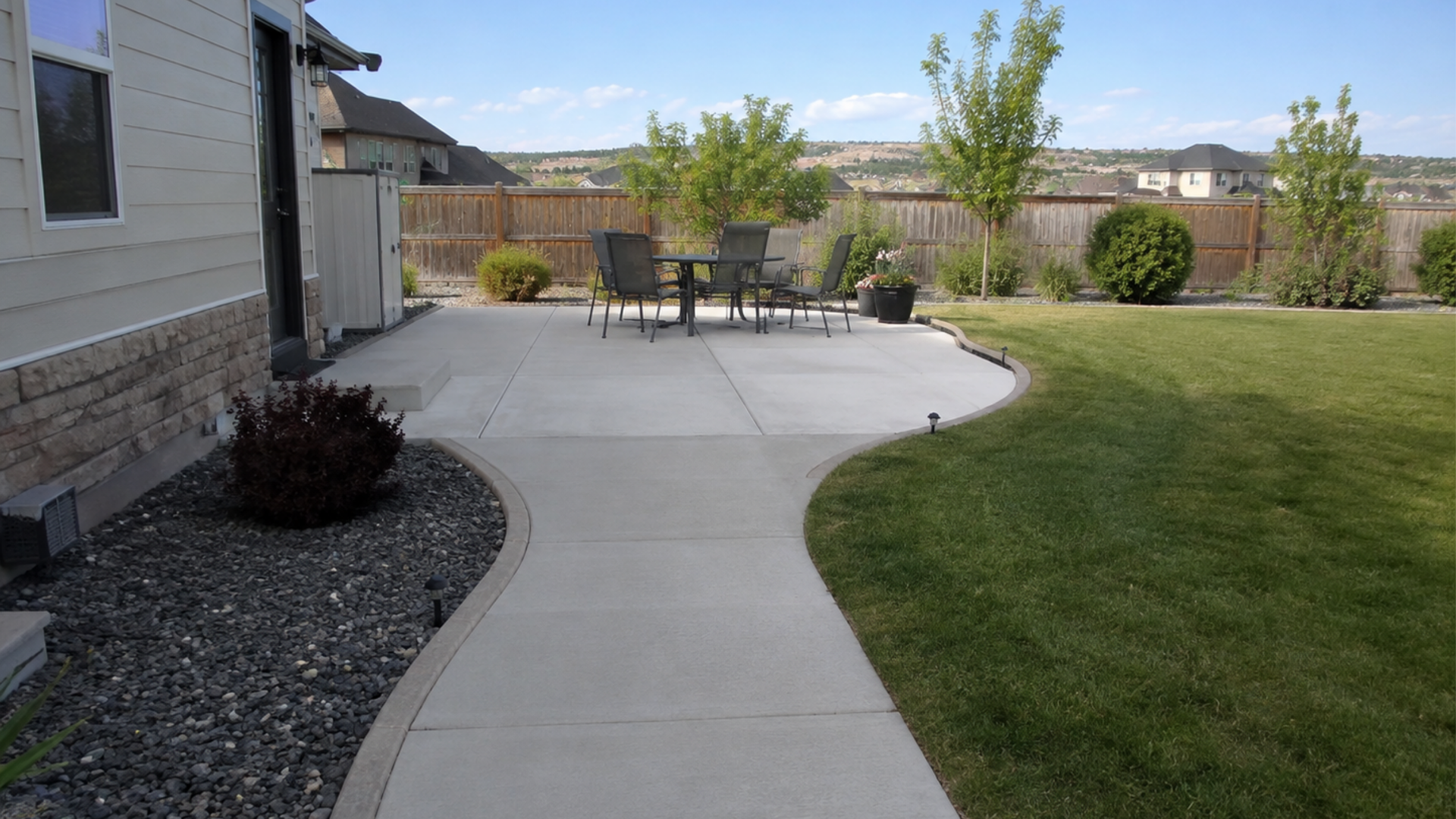
A walkway does not have to be treated as a separate project from the rest of the backyard. When a homeowner is planning a patio, connecting the patio with a concrete walkway can create a more usable outdoor layout.
Common connections include:
- Driveway to patio
- Side yard to backyard
- Patio to garden
- Patio to garage
- Front yard to backyard
- Outdoor living space to another structure
Planning these surfaces together can help keep elevations, finishes, borders, and layouts consistent.
For example, a standard broom-finished walkway could lead into a decorative stamped patio, or the same colored border could be carried through both surfaces.
Homeowners considering a larger outdoor project can also explore Full Contact Concrete's concrete patios and designs services.
Commercial Sidewalks and Accessible Routes
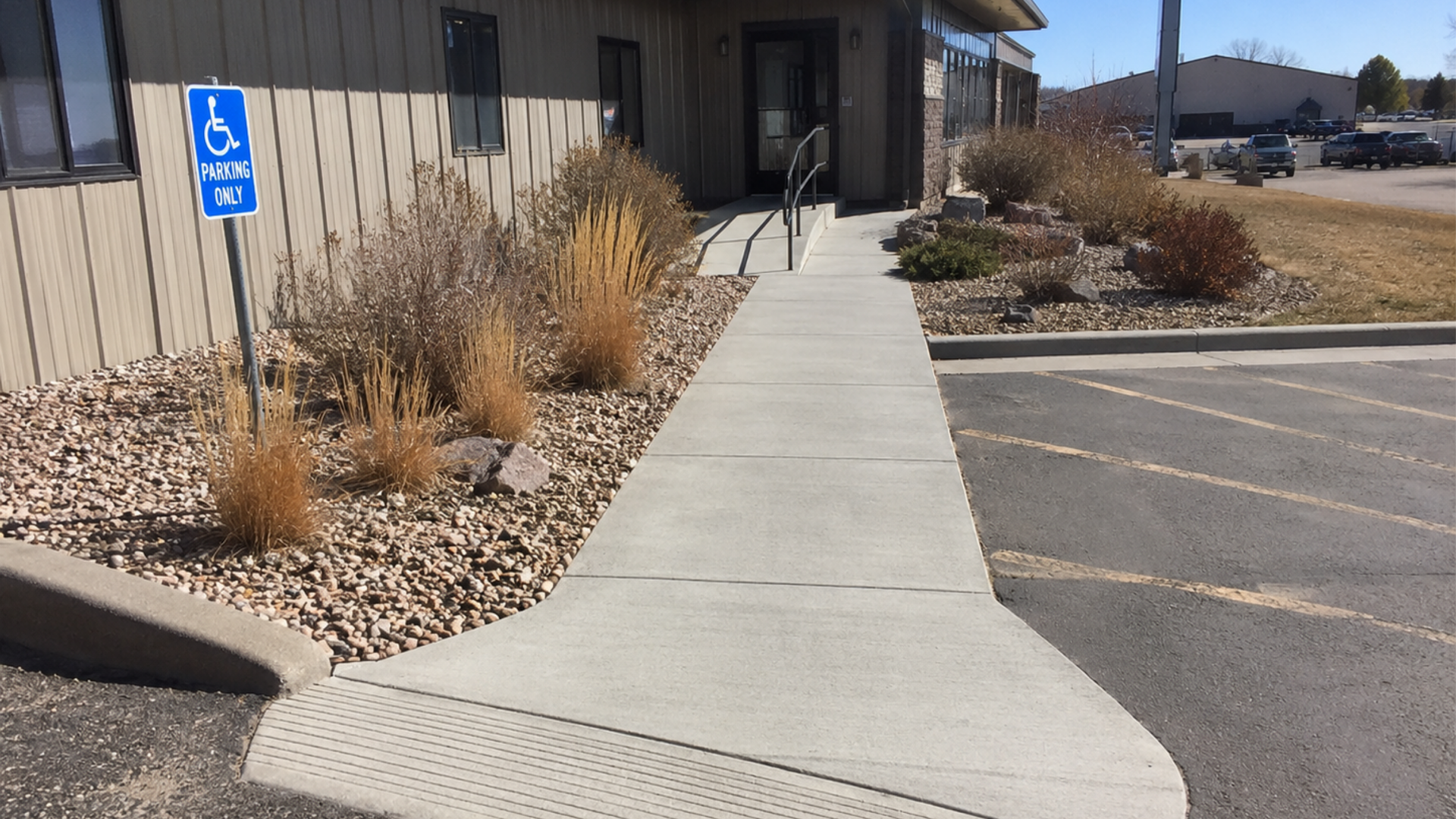
Commercial sidewalks have a different set of priorities than many residential walkways.
The surface may need to handle more daily foot traffic while connecting parking areas, entrances, buildings, and other parts of the property.
Accessibility may also need to be considered.
Where ADA requirements apply, accessible walking surfaces generally need at least 36 inches of clear width. Slope, changes in level, turning space, ramps, and the route between accessible parking and the building entrance can also affect the design.
Commercial property owners should avoid assuming that a standard residential sidewalk layout will automatically meet the needs of a commercial site.
The route should be planned around the actual property, applicable accessibility requirements, and local regulations.
Which Concrete Finish Is Best for a Casper Walkway?
The surface finish affects more than appearance. It can also influence traction, maintenance, and project cost.
For an exterior walkway in Wyoming, the finish should make sense for the conditions where it will be used.
Broom Finish
A broom finish is one of the most common choices for residential and commercial sidewalks.
After the concrete is leveled and finished, a broom is passed across the surface to create light texture.
That texture provides better traction than a very smooth finish, which is useful for exterior concrete exposed to rain, snow, and moisture.
Broom-finished concrete is also simple enough to work with almost any home or commercial building.
Stamped Concrete
Stamped concrete is a good option when the walkway is intended to contribute more to the overall design of the property.
Patterns can resemble materials such as:
- Natural stone
- Slate
- Brick
- Tile
Stamped concrete works particularly well around front entrances, patios, landscaped areas, and other locations where appearance matters.
It generally costs more than standard concrete because the coloring, stamping, and finishing process requires additional materials and labor.
Colored Concrete
Colored concrete allows homeowners to move away from standard gray while keeping the surface itself relatively simple.
The color can be chosen to complement the home's exterior, landscaping, patio, retaining walls, or other hardscape features.
For many residential properties, subtle earth tones work well because they add visual interest without making the walkway look too busy.
Exposed Aggregate
Exposed aggregate reveals some of the stone within the concrete rather than leaving the entire surface covered with cement paste.
The result is a textured, decorative appearance that can work well for walkways, patios, and entrances.
It can be a good middle ground for homeowners who want more visual character than broom-finished concrete but do not necessarily want a stamped pattern.
Do You Need a Permit for a Concrete Walkway in Casper?
It depends on where the concrete is located and what the project affects.
A private walkway located fully within your property is different from a public sidewalk, curbwalk, curb, or concrete located within the public right-of-way.
For work involving City of Casper sidewalk infrastructure, local requirements can apply before concrete is removed, altered, or installed.
Public right-of-way projects may also involve additional engineering, contractor, inspection, bonding, or insurance requirements depending on the project.
Before scheduling demolition or assuming that an existing sidewalk can simply be replaced, determine whether the concrete is:
- Entirely on private property
- Part of a public sidewalk
- Connected to a curb or curbwalk
- Located within public right-of-way
- Part of a commercial site
- Required to meet accessibility standards
Full Contact Concrete property owners can also review our guide covering concrete permits in Casper, WY for a deeper look at local concrete project requirements.
If there is any uncertainty, confirm the project's requirements with the City of Casper before work begins.
Questions to Ask a Casper Concrete Walkway Contractor
Getting several estimates can help you understand the expected cost of a project, but the lowest number does not always represent the best value.
You also need to understand what each estimate includes.
Before choosing a contractor, consider asking:
- Is removal of existing concrete included?
- What site preparation is included?
- How will the base be prepared?
- How will water drain around the new walkway?
- What width would you recommend for this location?
- Which finish would work best here?
- Does the project require a permit?
- Who is responsible for obtaining required permits?
- How will the walkway connect with existing concrete?
- How will control joints be handled?
- When will the walkway be ready for foot traffic?
- Is the work covered by a warranty?
A contractor should be able to explain the scope without making the process unnecessarily complicated.
Pay particular attention to preparation and drainage. A quote that is cheaper because important site work has been excluded may not actually save money over the life of the walkway.
You can learn more about Full Contact Concrete's sidewalk and walkway installation in Casper if you are starting to collect estimates for your property.
Frequently Asked Questions About Concrete Walkways in Casper
How much does a concrete walkway cost in Casper?
For early planning, a standard concrete walkway can often be budgeted around $7 to $17 per square foot. Decorative finishes, demolition, grading, difficult access, reinforcement, and other site conditions can increase the cost.
The best way to determine actual project pricing is to have the property evaluated by a local concrete contractor.
How wide should a residential concrete walkway be?
Many residential walkways are around 3 to 4 feet wide.
A wider front entry walkway may be 4 to 6 feet or more, depending on the available space and desired appearance.
The right width should be based on how people will use the path rather than choosing a dimension only because it is common.
What is the best concrete finish for a sidewalk in Casper?
A broom finish is one of the most practical options because it provides added texture for exterior walking surfaces.
Stamped concrete, colored concrete, and exposed aggregate can also work well when homeowners want a more decorative design.
How long does a concrete walkway last?
A properly installed concrete walkway can last for decades.
Its lifespan depends on site preparation, drainage, concrete quality, weather exposure, joint placement, use, and overall installation quality.
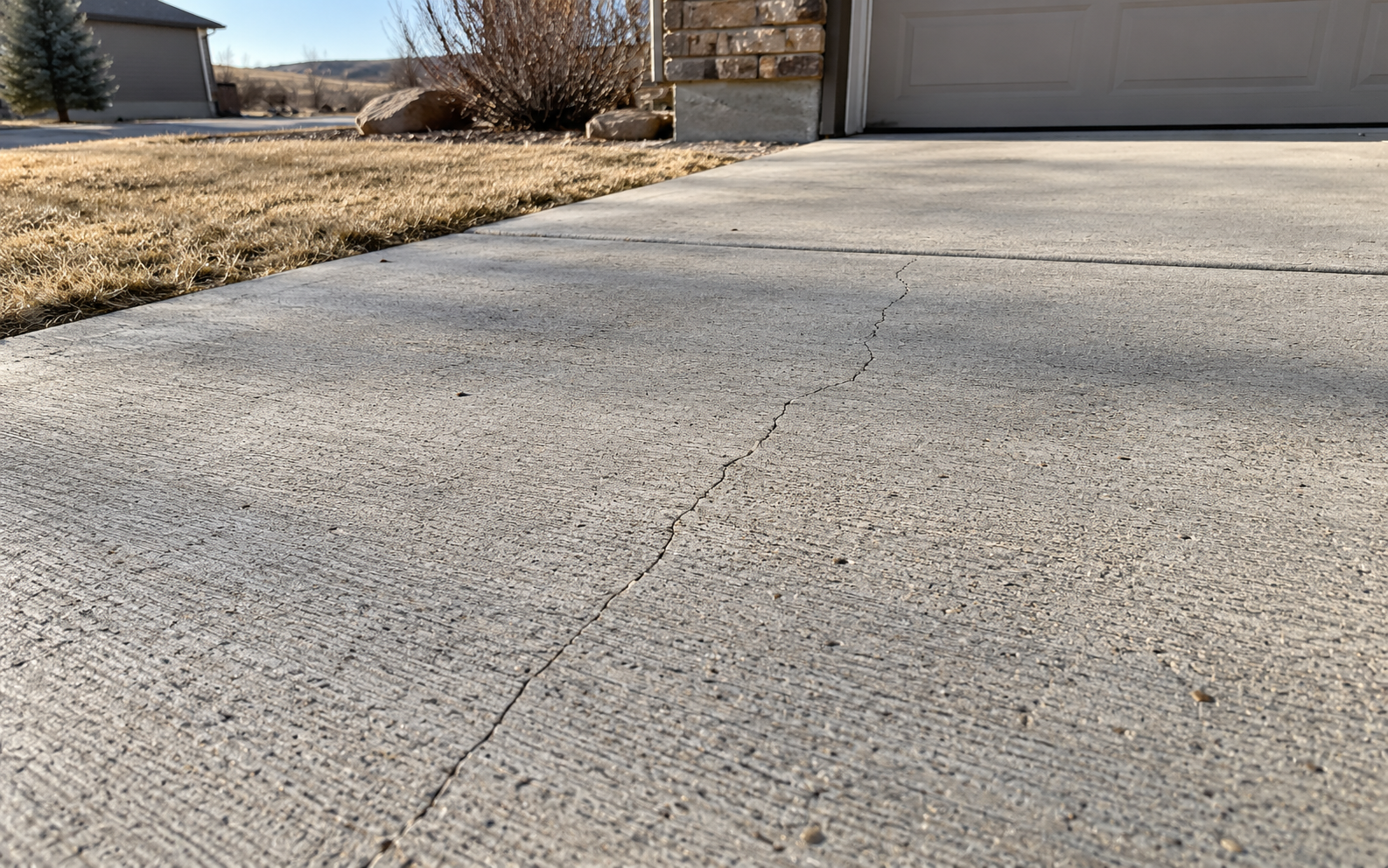
Do concrete walkways crack?
Concrete can develop cracks over time because the material shrinks and moves as temperature and moisture conditions change.
Good project planning helps manage that movement and reduce avoidable cracking.
Do I need a permit to replace a sidewalk in Casper?
It depends on the location of the sidewalk.
Concrete located entirely on private property may have different requirements from a public sidewalk or work affecting City of Casper right-of-way.
Projects involving public infrastructure should be confirmed with the city before work begins.
Can stamped concrete be used for a walkway in Casper?
Yes. Stamped concrete is commonly used for decorative entry walkways, garden paths, and connections to patios. Homeowners should select a finish that provides suitable traction for an exterior surface exposed to Wyoming weather.
Planning a New Concrete Walkway in Casper?
A well-designed walkway should make your property easier to use while fitting naturally with the home, landscaping, driveway, patio, or commercial building around it.
For most projects, the biggest decisions are the walkway size, layout, finish, drainage, site conditions, and whether existing concrete needs to be removed.
Cost is important, but comparing estimates based only on price can leave out some of the work that matters most.
Full Contact Concrete provides concrete sidewalk and walkway services for residential and commercial properties in Casper, WY and surrounding communities.
If you're planning a new walkway, replacing an existing sidewalk, or considering decorative concrete for an entrance or outdoor area, contact Full Contact Concrete to request an estimate and discuss the project.