When is the Best Time to Pour Concrete in Casper, Wyoming?
If you are planning a driveway, patio, or foundation project this year, timing is one of the biggest factors in how well your concrete performs over the long run. In Casper, Wyoming, where winters are long, summers are short and intense, and the wind almost never quits, the question of when to pour matters even more than it does in milder parts of the country.
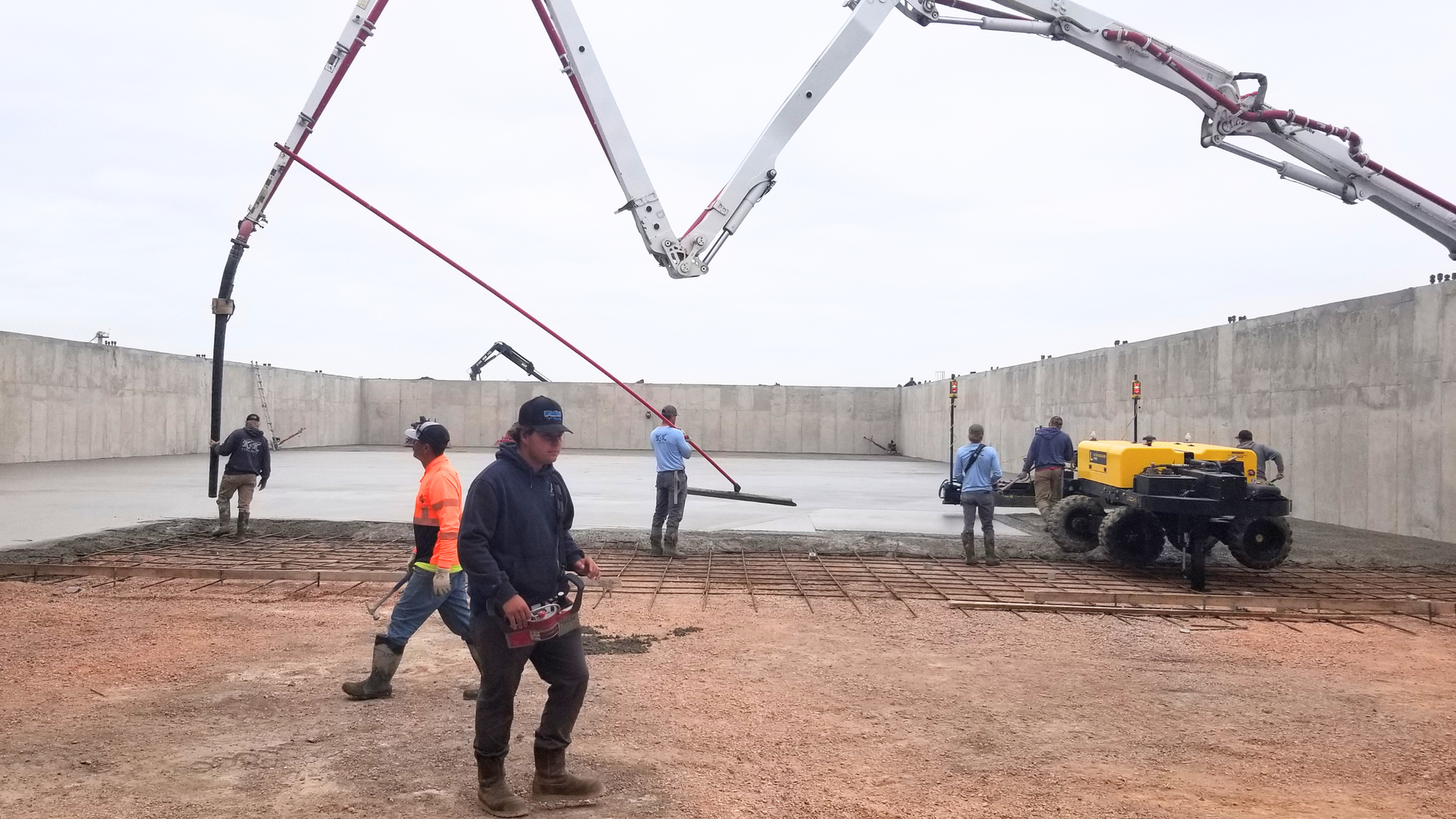
The best time to pour concrete in Casper, Wyoming falls between late May and mid-September, when overnight temperatures stay above freezing, daytime highs remain manageable, and ground conditions have fully recovered from winter. That said, the exact window depends on the project type, the site, and the weather pattern in any given year.
This guide breaks down what actually happens to concrete during each season on the Wyoming high plains, which conditions to target, and how to plan around Casper's climate so your finished slab looks clean, cures properly, and holds up for decades. Whether you are budgeting a new Casper concrete driveway installation or scheduling a commercial slab, understanding local timing gives you a real advantage.
Best Time to Pour Concrete in Casper, Wyoming: The Ideal Window
For most residential and commercial concrete work in Casper, the ideal pouring window runs from late May through mid-September. During this stretch, average overnight lows in Casper generally stay above 40 degrees Fahrenheit, daytime highs sit comfortably between 70 and 90 degrees, and the risk of a sudden freeze or a heavy snowstorm drops close to zero. That combination gives fresh concrete the steady temperature range it needs to hydrate properly and gain strength during the first 24 to 72 hours after placement.
Late May through mid-September is also when local subgrade conditions are most stable. The frost line has fully thawed, snowmelt has drained, and soil moisture levels are typically within a workable range for excavation, compaction, and forming. Trying to pour outside this window is not impossible, but it usually requires additional measures that increase the total project cost.
If your schedule is flexible, aiming for June, July, or August offers the widest margin of safety. Early May and late September can work well, but they demand closer monitoring of the forecast.
Why Temperature Matters More Than the Calendar
The calendar tells you what month it is. It does not tell you what your concrete will experience during placement, finishing, and the critical early curing phase. Two guidelines from the American Concrete Institute (ACI) shape professional pouring decisions across the country, and both apply directly to work in Casper.
The ACI 306 Cold Weather Rule
ACI 306 cold weather concreting standards define cold weather concreting as any period where the average daily air temperature falls below 40 degrees Fahrenheit for more than three consecutive days, or where the ambient temperature drops below 50 degrees for more than half of any 24-hour period. Once conditions cross that line, contractors must take specific protective measures: heated water, heated aggregate, insulating blankets, ground heaters, or enclosed shelters, depending on severity.
In Casper, ACI 306 conditions generally apply from mid-October through mid-April. Pouring during this window is technically possible with the right precautions, but it adds significant cost and complexity to any project.
The ACI 305 Hot Weather Rule
ACI 305 hot weather concreting addresses conditions where concrete temperature exceeds 95 degrees Fahrenheit, ambient temperature is high, evaporation rate is elevated, or wind speeds increase moisture loss from the fresh slab surface. Casper's summers rarely stay above 95 degrees for extended periods, but the combination of high elevation, low humidity, strong sun, and steady wind can push evaporation rates above the ACI-recommended limit of 0.2 pounds per square foot per hour even on a mild-looking afternoon.
That is why local expertise matters more than a simple temperature reading. A 75 degree day in Casper with 20 mile-per-hour winds and 15 percent humidity can be harder on fresh concrete than a 90 degree day in a humid climate with no wind.
How Casper’s Seasons Affect Concrete Pouring & Curing
Casper's climate is defined by extremes. The city sits at roughly 5,150 feet of elevation on the North Platte River, in a semi-arid basin ringed by mountains. That geography produces long winters, brief but intense summers, wide day-to-night temperature swings, and some of the highest average wind speeds of any city in the United States. Each season presents its own considerations for concrete work, drawn from Casper climate normals from the National Weather Service.
Spring (March – May): Navigating Variable Temps & Unstable Subgrades
Spring is the most variable season for concrete work in central Wyoming. March and early April typically feel like winter, with snowstorms possible into May in some years. Overnight lows often stay in the 20s and 30s, and the ground is still thawing at depth. Pouring during this stretch generally requires cold weather protection under ACI 306, and site conditions can be muddy or unstable as frozen subgrade releases meltwater.
By mid-May, conditions usually improve. Casper's average last spring frost falls around May 21, though frosts have been recorded into early June. Late May is often the earliest reliable window for standard residential pours without special protection, but a mid-week forecast check is still essential.
Summer (June – August): Managing Rapid Evaporation & High Winds
Summer is the strongest window for concrete work across Casper, Wyoming, and the surrounding communities we serve, including Mills, Bar Nunn, Evansville, and Glenrock. Average July highs sit near 87 degrees Fahrenheit, overnight lows stay in the 50s, and the frost risk is essentially zero.
The main summer challenges are wind and evaporation. Casper regularly sees afternoon winds of 15 to 25 miles per hour, and the dry air at 5,150 feet pulls moisture from fresh concrete faster than at lower elevations. Experienced crews often schedule summer pours for early morning to give the slab a head start before wind and heat peak in the afternoon.
Fall (September – November): Utilizing the Secondary Curing Window
September is a strong month for pouring in Casper. Overnight lows generally stay above 40 degrees Fahrenheit through mid-September, wind speeds ease slightly compared to spring, and the intense summer sun has softened. Many contractors consider mid-September through the first week of October a valuable secondary window, especially for driveways, patios, and other flatwork that benefits from steady, moderate curing conditions.
By late October, the picture changes. Casper's first fall frost typically arrives around September 20, and by early November, hard freezes and snow become likely. Late fall pours are possible but usually fall under ACI 306 cold weather requirements.
Winter (December – February): Specialized Cold Weather Concreting
Winter concreting in Casper is a specialized job. Average January highs sit near 36 degrees Fahrenheit, overnight lows regularly drop into the single digits or below zero, and the frost line can push down 3 to 4 feet or more depending on snow cover. Concrete can be poured during winter using heated enclosures, ground heaters, insulating blankets, calcium-based accelerators, and heated mix water, but the added cost and schedule risk make winter pours the exception rather than the rule for most residential projects.
Commercial and municipal work sometimes runs through winter when project timelines demand it, but even then, contractors weigh the tradeoffs carefully.
Casper Seasonal Pouring Guide
| Season | Months | Typical Temp Range | Pouring Rating | Key Considerations |
|---|---|---|---|---|
| Winter | Dec, Jan, Feb | 14 to 36 F | Not recommended for standard residential work | Requires full ACI 306 cold protection; heated enclosures, ground heaters, and accelerators typical; 15 to 40 percent cost premium |
| Spring | Mar, Apr, early May | 25 to 65 F | Marginal early, improving late May | Frost line still receding through April; wet subgrade risk from snowmelt; last frost around May 21 |
| Summer | Late May, Jun, Jul, Aug | 55 to 87 F | Prime window | Best overall conditions; wind and evaporation are the main concerns; morning pours often preferred |
| Fall | Sep, early Oct | 45 to 75 F | Strong secondary window | Stable through mid-September; first frost around Sep 20; monitor forecast closely by late October |
| Late Fall | Late Oct, Nov | 20 to 55 F | Marginal to not recommended | ACI 306 protection generally required; added cost and schedule risk |
Key Conditions to Target in Casper
Season is a general guide. Actual pouring decisions come down to the specific conditions on the day of the pour and during the first 24 to 72 hours of curing. In Casper, five factors matter most.
Ambient Temperature Range
Aim for daytime highs between 50 and 90 degrees Fahrenheit, with overnight lows above 40 degrees. Concrete cures best when the slab itself stays between 60 and 80 degrees during initial set. If daytime temperatures push into the 90s, morning pours and evaporation control become essential. If overnight temperatures drop below 40 degrees, insulating blankets are typically required to protect the surface from thermal stress.
Wind Speed
Wind is the single most underrated factor in Casper. Sustained winds above 15 miles per hour dramatically increase surface evaporation, which can lead to plastic shrinkage cracking (fine surface cracks that appear before the concrete finishes setting). On high-wind days, contractors may use windbreaks, evaporation retarders, fogging, or plastic sheeting to slow moisture loss.
Humidity and Evaporation Rate
Casper's average relative humidity often drops below 40 percent during summer afternoons. Combined with high elevation and strong sun, this creates evaporation rates that would trigger ACI 305 hot weather protocols even at moderate temperatures. Professional crews monitor evaporation using the ACI evaporation rate nomograph and adjust their placement schedule accordingly. Portland Cement Association guidance on concrete placement reinforces evaporation control as one of the top variables to plan around.
Ground and Subgrade Conditions
The soil beneath a concrete slab has to be stable, properly compacted, and free of standing water. In Casper, that usually means waiting until subgrade has drained after snowmelt or spring rain, and confirming that the frost line has fully receded before pouring. Pouring on a frozen or saturated base leads to settling, cracking, and long-term failure.
Precipitation Forecast
A clear seven-day forecast is ideal. Concrete surfaces are especially vulnerable during the first 24 hours after placement, when rain can wash out the finish or dilute the surface paste. In Casper, summer thunderstorms can appear quickly, so professional contractors often check hourly forecasts before scheduling and have plastic sheeting on hand.
Ideal vs Marginal Conditions Checklist
| Condition | Ideal | Acceptable | Avoid |
|---|---|---|---|
| Daytime high | 60 to 85 F | 50 to 90 F | Below 40 F or above 95 F |
| Overnight low | Above 50 F | Above 40 F | Below 40 F unprotected |
| Wind speed | Under 10 mph | 10 to 15 mph | Sustained above 15 mph |
| Relative humidity | Above 50 percent | 30 to 50 percent | Below 30 percent |
| Evaporation rate | Under 0.1 lb/sqft/hr | 0.1 to 0.2 lb/sqft/hr | Above 0.2 lb/sqft/hr |
| Subgrade condition | Dry, compacted, thawed | Slightly damp, compacted, thawed | Saturated, frozen, or uncompacted |
| 72-hour precipitation forecast | Clear | Isolated showers | Steady rain or snow |
Wyoming's High Plains Reality: Local Factors That Change the Timing
Concrete guidance written for the national market rarely accounts for what actually happens on the Wyoming high plains. If you are hiring a contractor in Casper, these local factors should shape the conversation about timing.
Wind and Evaporation
Casper is one of the windiest cities in the United States, with an average annual wind speed around 12 to 13 miles per hour and gusts routinely above 40 miles per hour, especially in spring and fall. High wind combined with low humidity accelerates surface moisture loss, causing plastic shrinkage cracking and reduced bleed water availability at the finishing stage. That is why experienced Casper contractors often build wind protection into the placement plan from the first estimate.
Elevation and UV Exposure
At 5,150 feet, Casper receives more direct UV radiation than lower-elevation cities. UV does not damage cured concrete directly, but it accelerates the drying of the surface paste during finishing, which affects long-term durability if not managed. Shade tents, fog sprayers, and prompt curing compound application help offset the effect.
Freeze-Thaw Cycles
Wyoming's spring and fall are defined by rapid temperature swings. It is not unusual for Casper to see a 40 to 50 degree Fahrenheit swing between afternoon high and overnight low in April, May, and September. These freeze-thaw cycles are hard on fresh concrete during the first week after placement and are one of the main reasons to avoid pouring in early spring or late fall without protective measures.
Regional Soil Conditions
The Casper area sits on a mix of alluvial soils, silty clays, and shale-derived materials that vary widely from lot to lot. Some soils drain well; others hold water and heave with frost. According to USDA Web Soil Survey data for Natrona County, subgrade preparation often includes additional gravel base or geotextile fabric to compensate for local soil behavior. A pre-pour site evaluation is essential to determine whether extra base material is needed.
What Happens When Concrete is Poured in the Wrong Conditions
Timing mistakes are expensive. Concrete poured under the wrong conditions may look acceptable at first, but structural and cosmetic problems often appear within the first year and worsen over time.
Cold weather risks: Concrete that freezes before reaching 500 psi compressive strength (typically the first 24 to 48 hours) can lose up to 50 percent of its long-term strength. Freeze damage often shows up as surface scaling, spalling, or cracking, and slowed hydration can leave the slab weak and prone to settling.
Hot weather risks: Fast evaporation causes plastic shrinkage cracking, reduced bleed water, and premature stiffening that makes finishing difficult. Concrete placed in hot, dry, windy conditions without protection often shows a network of fine surface cracks within the first year.
Wet or frozen subgrade risks: A subgrade that is saturated or partially frozen at pouring will settle unevenly as it drains or thaws, leading to structural cracking, drainage problems, and surface deformation. This is a common cause of early driveway failure in the northern Rockies.
Can Concrete Be Poured Year-Round in Casper?
Technically, yes. Practically, it depends on the project, the budget, and the schedule.
Cold-weather concreting under ACI 306 involves heated water and aggregate, chemical accelerators (typically non-chloride, since chloride accelerators can corrode rebar), insulating blankets, ground heaters, and sometimes fully enclosed heated shelters. These measures add real cost and require skilled execution. For most residential driveways and patios, waiting for warmer weather is more economical than paying for winter protection.
Hot-weather concreting under ACI 305 is generally easier to manage in Casper because peak summer temperatures rarely stay extreme for long. Early morning pours, evaporation retarders, chilled mix water, and moist curing usually keep summer projects on track without significant added cost.
The decision comes down to project urgency. New construction foundations with tight schedules sometimes cannot wait for peak season. A patio or driveway upgrade, on the other hand, is almost always better done during the reliable window.
How Different Concrete Projects React to Casper's Seasons
Not every project has the same tolerance for shoulder-season pouring. Structural work and flatwork behave differently, and finish requirements matter too.
Project Type by Season
| Project Type | Best Window | Acceptable | Not Recommended | Notes |
|---|---|---|---|---|
| Driveways | June, Jul, Aug, early Sep | Late May, early Oct | Nov through mid-May | Surface finish and curing conditions are critical |
| Patios | June, Jul, Aug | Late May, Sep | Nov through mid-May | Especially sensitive for decorative finish |
| Foundations | May through Sep | Apr, Oct with protection | Dec, Jan, Feb without full ACI 306 measures | Can justify winter protection if project timeline requires it |
| Sidewalks and walkways | May through Sep | Apr, Oct | Nov through Mar | Similar to driveways; thickness helps |
| Structural slabs | May through Sep | Apr, Oct with protection | Dec through Feb without full protection | Cold protection often possible for commercial timelines |
| Stamped and colored concrete | Jun, Jul, Aug | Late May, early Sep | Oct through mid-May | Most weather-sensitive category; consistent set time is critical |
Driveways and patios are surface-finish-critical and benefit most from moderate, stable conditions. If you are planning a
concrete patio installation, aim for the middle of the summer window when overnight temperatures stay consistent.
Concrete foundations and
concrete slabs prioritize compressive strength and can justify cold weather protection when timelines require winter work.
Stamped and colored concrete is the most weather-sensitive category, since finish detail depends on consistent set time and controlled evaporation.
Planning Your Concrete Project Timeline in Casper
Because the reliable pouring window in Casper is relatively short, scheduling early is one of the smartest moves a property owner can make. Local concrete contractors typically book up 6 to 10 weeks in advance during peak season, and popular months like June and July fill first.
A realistic project timeline runs two to four weeks for consultation and estimate, one to three weeks for permit coordination if required, two to eight weeks for scheduling depending on scope and season, and one to five days of on-site work for typical residential projects, followed by 7 to 28 days of curing before full use. Commercial and foundation work follow longer timelines.
If you are hoping for a summer pour of a driveway, patio, or sidewalks and walkways, starting the estimate process in late winter or early spring gives you time to finalize design, secure permits, and lock in a placement date before the calendar fills.
Frequently Asked Questions About Pouring Concrete in Casper
What is the coldest temperature concrete can be poured at in Casper?
Concrete can technically be placed in temperatures below freezing with proper cold weather measures, but the ACI 306 threshold of 40 degrees Fahrenheit average daily temperature is the practical guideline. Below that, protective measures become mandatory, and cost increases significantly for most residential projects.
Is it too hot to pour concrete in July or August in Casper?
Rarely. Casper's summer highs typically stay below 95 degrees Fahrenheit, and morning pours combined with standard evaporation control usually keep summer projects well within safe limits. Wind and low humidity are bigger concerns than raw temperature at this elevation.
How long should I wait after snowmelt before pouring a driveway?
Wait until the subgrade has fully drained and the frost line has receded. In Casper, that usually means waiting until late May or early June for spring pours, depending on the winter's snow depth and spring temperatures. A pre-pour site inspection confirms readiness.
Can I pour a patio in October in Casper?
Early October is often workable if the forecast is clean and overnight lows stay above 40 degrees Fahrenheit. Mid to late October usually requires cold weather protection under ACI 306. A local contractor can assess whether a late-fall pour makes sense for your specific project.
Does wind really affect concrete curing that much?
Yes. Wind is one of the leading causes of plastic shrinkage cracking in Casper. Sustained winds above 15 miles per hour combined with low humidity can more than double surface evaporation rates. Experienced crews plan around wind conditions and use windbreaks, fogging, or evaporation retarders when necessary.
How much extra does winter concreting cost in Casper?
It varies by project scope, but heated enclosures, ground heaters, insulated blankets, and specialty admixtures can add 15 to 40 percent to the base project cost. For most residential projects, waiting for peak season is more economical.
Getting Your Casper Concrete Project on the Calendar
Timing a concrete pour in Casper, Wyoming means balancing three things: the calendar, the daily forecast, and the specific conditions on your site. The prime window runs from late May through mid-September, but a professional contractor will always confirm placement conditions based on the actual weather and subgrade status on the day of the pour. Wind, humidity, overnight temperatures, and soil readiness matter as much as the month on the calendar.
If you are planning a new driveway, a patio, a foundation, or any other concrete project in Casper or the surrounding Wyoming communities we serve, including Mills, Bar Nunn, Evansville, Glenrock, Douglas, and Sheridan, the best time to start the conversation is now. Booking early gives you time to plan properly, secure your preferred placement window, and avoid the compressed schedule of late-season projects.
Full Contact Concrete brings 14 years of experience working in central Wyoming's climate, and we build every project around disciplined preparation and site-specific conditions. Contact us today to request a free estimate and schedule a consultation for your upcoming concrete project.