Can You Pour Concrete in Winter in Casper, Wyoming? Cold-Weather Facts
Casper winters are long, cold, and unpredictable. Sub-freezing stretches can last weeks, snowstorms can bury a site in feet of powder, and overnight lows regularly drop into the single digits or below zero. It is easy to assume that concrete work is off the table from November through March, but the reality is more nuanced. Pouring concrete in winter in Casper, Wyoming is entirely possible, but it depends less on the calendar and more on physics: keeping the water inside the concrete mixture liquid long enough for it to react with cement and gain strength before the slab freezes.
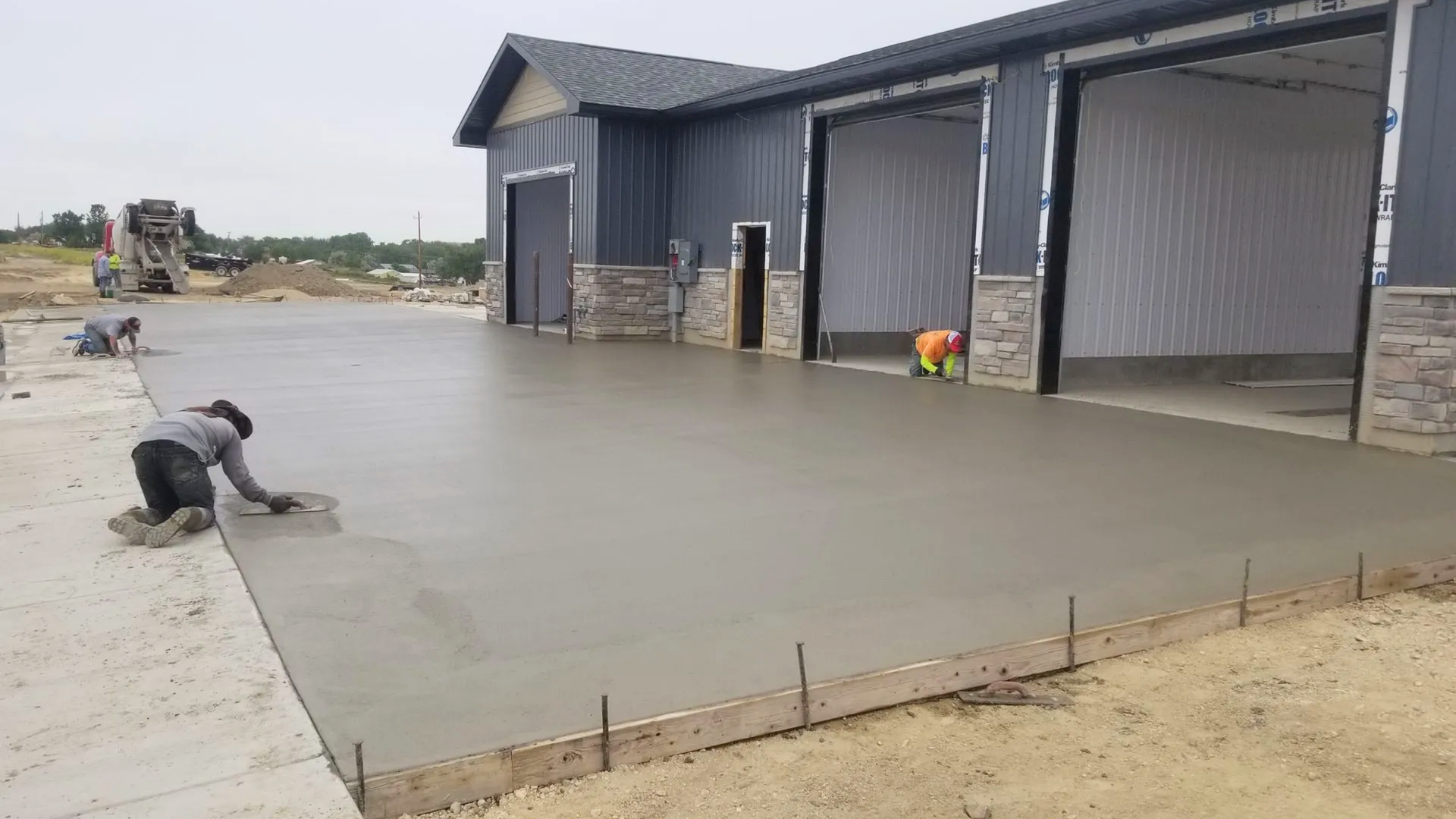
That reaction, called hydration, is what turns a wet mixture into a hard, durable slab. If the water freezes before the concrete reaches roughly 500 pounds per square inch (psi) of compressive strength, ice crystals expand inside the pores, disrupt the reaction, and permanently weaken the slab. In Casper, where high-altitude radiative cooling can drop nighttime temperatures 30 to 40 degrees below the day's high, protecting that internal water is a real engineering challenge that requires deliberate planning.
This guide walks through the science, the standards, the practical protection methods, the cost reality, and the situations when a winter pour actually makes sense on the Wyoming high plains.
Can You Pour Concrete in Winter in Casper, Wyoming?
Yes, concrete can be poured in winter in Casper, Wyoming when the crew follows American Concrete Institute (ACI) 306 cold weather concreting procedures. For most residential projects, waiting until the reliable pouring window between late May and mid-September is more economical. Winter pours generally make sense for foundations on tight construction schedules, commercial projects that cannot wait, and specialty situations like heated indoor slabs. For a full breakdown of Casper's ideal pouring conditions across all seasons, see our related article on the best time to pour concrete in Casper, Wyoming.
Why Water Matters in a Casper Winter Pour
Fresh concrete is not just a mix of dry ingredients. It is a chemical reaction in progress. When cement and water combine, they form hydrated calcium silicate compounds that give concrete its strength. That reaction takes hours to begin and days to complete, and it requires liquid water at every step.
What Hydration Actually Does
Cement particles are microscopic. When water contacts them, chemical bonds form on the particle surface and grow outward, eventually locking the aggregate into a solid matrix. This process releases heat, called the heat of hydration, which is why fresh concrete feels warm to the touch during initial set. In warm weather that internal heat is manageable. In a Casper winter, it can be the only thing keeping the slab above freezing during the first critical hours.
The Point Where Water Turns Against You
If the water inside a fresh slab freezes, three problems happen at once. First, the hydration reaction stops, because ice cannot react with cement the way liquid water does. Second, ice takes up about 9 percent more volume than the same amount of water, which pushes the concrete matrix apart from the inside. Third, when the concrete finally thaws, the internal structure is already damaged, and long-term strength can drop by 50 percent or more.
The 500 PSI Safety Threshold
Concrete is considered safe from permanent freeze damage once it reaches a compressive strength of approximately 500 psi. Below that threshold, freezing causes lasting harm. Above it, the internal structure has developed enough to resist the pressure of ice formation. Under ideal summer conditions, most standard concrete mixes reach 500 psi within 12 to 24 hours. In Casper winter conditions without protection, that same mix might take 3 to 7 days, or might never get there at all if internal temperatures drop below freezing during the reaction.
That is the entire game in a winter concrete pour: keep the mix warm enough, long enough, for the reaction to reach 500 psi before freezing sets in.
ACI 306 and Casper's Cold-Weather Reality
The American Concrete Institute publishes the ACI 306 cold weather concreting standard, the industry benchmark for winter work. It defines cold weather as any period where the average daily air temperature falls below 40 degrees Fahrenheit for more than three consecutive days, or where the ambient temperature drops below 50 degrees Fahrenheit for more than half of any 24-hour period.
In Casper, those conditions typically apply from mid-October through mid-April. During that stretch, the concrete industry recognizes that special measures are not optional. Anyone pouring concrete without them is gambling with the finished product.
ACI 306 requires that fresh concrete be maintained at a minimum of 50 degrees Fahrenheit for the first 72 hours after placement, or longer depending on the mix, cement type, and section size. That temperature has to be maintained inside the concrete, not just at the surface, and the protection has to continue through overnight lows and windy conditions.
High-Altitude Physics: What Makes Casper Different
Concrete guidance written for the national market often underestimates what happens at elevation. Casper sits at roughly 5,150 feet above sea level, and that thin, dry air changes the equation in three specific ways.
Radiative Cooling on Clear Winter Nights
At lower elevations, the atmosphere holds heat in overnight and moderates temperature swings. In Casper, the thin air lets heat escape rapidly from any surface exposed to the night sky. A fresh concrete slab can lose heat to the sky through radiative cooling even when air temperatures are relatively stable. On a clear January night, an unprotected slab can drop 30 to 40 degrees below the daytime high in a matter of hours.
Wind Chill and Convective Heat Loss
Casper is one of the windiest cities in the United States. Even in winter, sustained winds of 15 to 30 miles per hour are common. That wind pulls warmth out of a curing slab through convective heat transfer, essentially wicking the reaction heat away before it can build up inside the concrete. Windbreaks and enclosures are not decorative in Casper. They are structural to the pour.
Long Sub-Freezing Stretches
Winter in Casper is not a single cold night followed by warmer days. Sub-freezing stretches routinely last 5 to 15 consecutive days, with high temperatures never crossing 32 degrees Fahrenheit. Extended cold means concrete protection has to hold for a week or more, not just overnight. Ground heaters that run for 24 hours will not solve a 10 day cold snap. Sustained temperature control is the difference between a successful winter pour and a costly failure.
Cold-Weather Protection Measures That Actually Work
Winter concrete work in Casper is a system, not a single trick. Contractors combine several measures to keep the mix warm from batching through curing, drawing on established Portland Cement Association guidance on cold weather concreting.
Cold-Weather Protection Measures at a Glance
| Measure | Purpose | When Needed | Cost Impact |
|---|---|---|---|
| Heated mix water and aggregate | Raises initial mix temperature at plant | Below 40 F ambient delivery | Low; usually built into cold-mix pricing |
| Non-chloride accelerator | Speeds hydration and 500 psi strength gain | Any ACI 306 pour with reinforcement | Low to moderate |
| Insulating blankets | Traps hydration heat at slab surface | Every winter pour | Moderate; blankets reusable across jobs |
| Ground heaters | Thaws subgrade, prevents downward heat loss | Frozen ground, foundation work | High; equipment rental plus fuel |
| Heated enclosures | Full climate control around fresh slab | Extreme cold, large structural pours | Highest; setup labor plus fuel plus teardown |
| Windbreaks | Reduces convective heat loss during curing | Sustained winds above 15 mph | Low; often improvised with tarps and stakes |
Heated Mix Water and Aggregate
The concrete plant heats the water and, in extreme cold, the aggregate before batching. This raises the initial temperature of the mix so it arrives on site with enough thermal energy to stay above 50 degrees Fahrenheit through placement and finishing. Delivered concrete should typically arrive between 55 and 75 degrees for cold-weather placement.
Non-Chloride Accelerators
Chemical accelerators speed up the hydration reaction so the mix reaches 500 psi faster. Non-chloride accelerators are preferred over calcium chloride when the concrete contains steel reinforcement, because chlorides can corrode rebar over time and shorten the useful life of the slab.
Insulating Blankets and Curing Enclosures
After finishing, the slab is covered with insulating blankets rated by their R-value. A single blanket may hold heat overnight in mild cold; double-layer coverage or fully enclosed heated shelters are required in extreme conditions or for extended cold stretches.
Ground Heaters
The subgrade under a winter pour is often frozen solid to a depth of several feet. Ground heaters thaw the base and warm the surrounding air so the concrete does not lose heat downward or sideways during curing. On foundation and structural work, ground heaters are essential rather than optional.
Wind Protection
Temporary windbreaks and enclosed forming reduce convective heat loss. Even a simple tarp windbreak can preserve significant reaction heat when winds pick up.
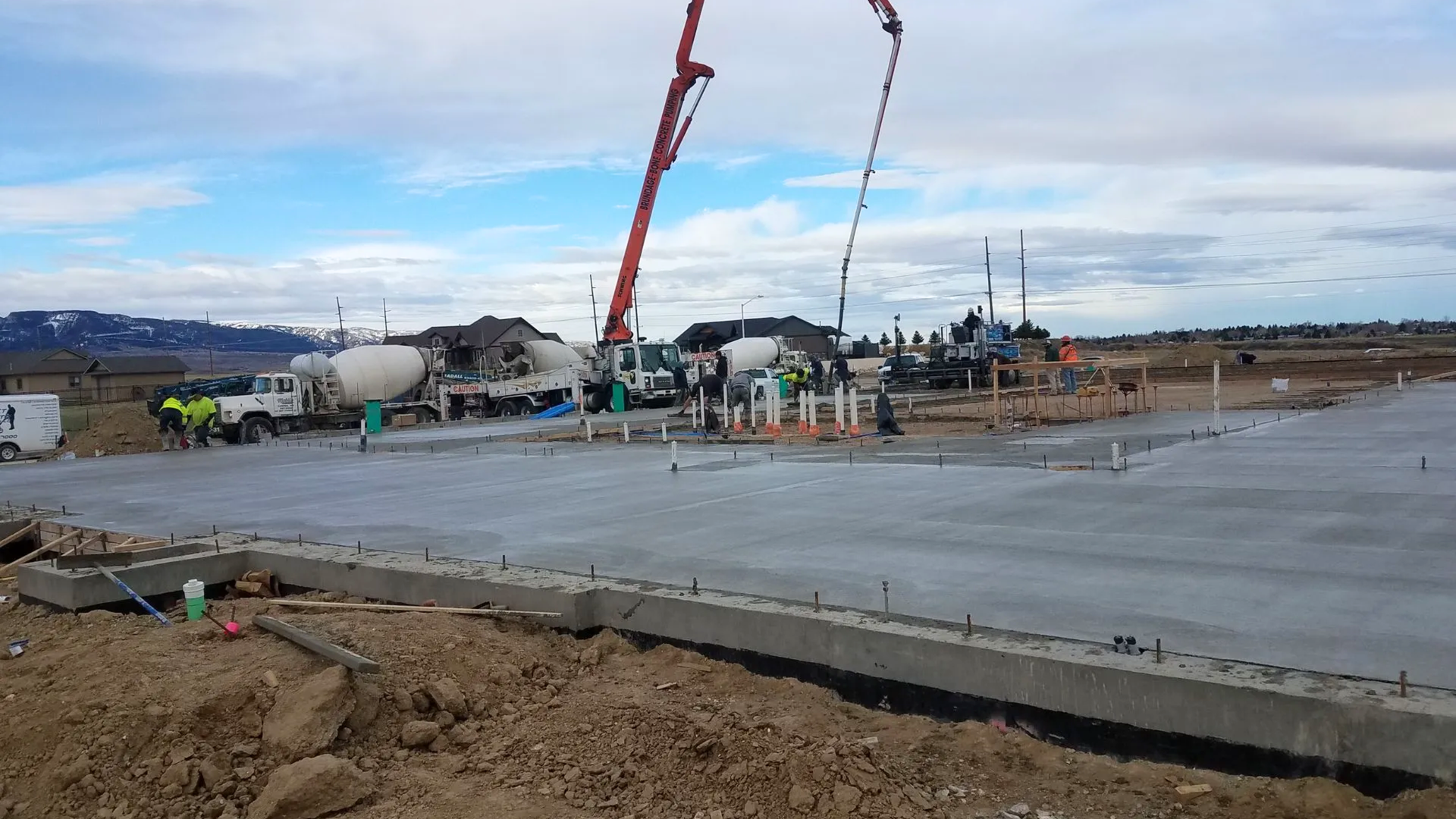
The 90-Minute Rule and Winter Delivery
The ASTM C94 standard for ready-mixed concrete specifies that a load must be discharged within 90 minutes of the water being added to the mix, or before 300 revolutions of the drum, whichever comes first. That rule exists because hydration begins immediately, and if the mix sits too long, initial set starts inside the drum.
Winter delivery makes the 90-minute rule harder to meet. Snow-covered roads slow trucks. Sub-freezing air draws heat out of the mix during transit, so a load that was 65 degrees leaving the plant might arrive at 50 degrees or lower. Batching plants often adjust by raising water and aggregate temperatures above normal to compensate, but if a truck sits waiting at a site because forming is not ready or because the crew is dealing with weather delays, that 90-minute window closes fast.
The practical lesson for anyone planning a winter concrete delivery: the site has to be ready before the truck arrives. Forms set, subgrade thawed, crew assembled, and protection materials on site. There is no room for last-minute problem solving in cold weather.
What Casper Winter Actually Looks Like
The temperature reality drives every decision about winter concreting. NOAA climate data for the Casper area, drawn from Riverton Weather Forecast Office records, gives a clear picture of what winter pouring means in practice.
Casper Winter Temperature Reality
| Month | Avg High (F) | Avg Low (F) | Typical Extreme Low (F) | Pouring Feasibility |
|---|---|---|---|---|
| November | 47 | 24 | -5 to 5 | Marginal; ACI 306 protection required |
| December | 37 | 17 | -15 to -5 | Difficult; full protection system typically required |
| January | 36 | 14 | -20 to -10 | Most difficult; heated enclosures often needed |
| February | 40 | 17 | -15 to -5 | Difficult; full protection required |
| March | 48 | 24 | -5 to 10 | Marginal; watch for mid-month warm-ups |
Two things stand out. First, the average daily temperature drops below 40 degrees Fahrenheit from November through March, which means ACI 306 applies for roughly five months of the year. Second, below-zero cold snaps are a normal part of Casper winters, not rare events. Protection measures have to be sized for the worst reasonable case, not the average.
Winter Pour Cost Reality
Winter concreting is not free. The added materials, equipment, labor, and schedule extension all add up.
Winter Pour Cost Breakdown
| Cost Item | Typical Premium | When It Applies |
|---|---|---|
| Cold-weather mix (heated water, admixture) | 3 to 8 percent | Every winter pour |
| Insulating blankets | 2 to 5 percent | Every winter pour |
| Ground heater rental and fuel | 5 to 15 percent | Foundation work, frozen subgrade |
| Heated enclosure setup and takedown | 5 to 15 percent | Extreme cold, structural pours, extended curing periods |
| Extended crew labor | 3 to 10 percent | Longer curing monitoring, staged placement, weather delays |
| Total typical premium over summer pricing | 15 to 40 percent | Depends on scope, exposure, and protection level required |
Foundation work often lands on the higher end because ground heaters and enclosed shelters are usually required. Simple flatwork like sidewalks or small slabs can sometimes be done with blankets and accelerators alone, keeping the premium closer to 15 to 20 percent.
That cost premium is why winter pouring is common for commercial construction on a fixed schedule but rare for residential upgrades. If your project is a driveway replacement or a new patio, waiting for the reliable spring or summer window will almost always save money.
When Winter Pouring Makes Sense in Casper
Winter is not the right time for every concrete project, but there are several situations where it works or is even preferred.
New Construction Foundations
Home builders and commercial contractors often cannot wait five months for spring to pour a foundation. The framing crew is scheduled, materials are ordered, and delays cascade through the project. In this case, the cost of cold-weather concreting for new concrete foundations is factored into the project budget from the start, and the work proceeds.
Commercial and Municipal Projects
Warehouse floors, retail slabs, and municipal infrastructure often run on tight timelines that cannot pause for weather. These projects typically use full enclosures, heated mix water, and detailed cold-weather plans as standard practice.
Emergency Repairs
A cracked foundation, failed slab, or damaged sidewalk creating a safety hazard cannot wait for spring. Emergency repairs go forward regardless of season, using whatever protective measures are appropriate.
Heated Indoor Slabs
Basement slabs, garage floors, and interior slab-on-grade projects inside a heated structure are essentially climate-controlled from the moment they are placed. The building itself acts as an enclosure, and winter pouring inside a heated space is straightforward.
When to Wait
For most residential projects that do not have a hard schedule constraint, waiting for spring is the smart move. New driveways, patios, walkways, and decorative concrete all benefit from the mild, stable curing conditions of Casper's summer window. The added cost of winter protection rarely pays back for these projects.
Special Considerations for Fence Posts, Deck Footings, and Small Pours
Homeowners occasionally ask about small winter pours, especially concrete for fence posts, deck footings, and mailbox posts. The rules are similar but the scale is smaller.
For standard bagged concrete mix, the general recommendation is not to pour when the ambient temperature is expected to fall below 40 degrees Fahrenheit during the first 24 to 48 hours after placement. Cold-weather rated mixes with accelerators and lower water requirements can be used in colder conditions, sometimes down to 20 degrees Fahrenheit or lower, but they still require protection from freezing.
For post footings specifically, three factors matter. The hole cannot be frozen at the time of pouring, because the concrete will not bond properly to icy soil. The bottom of the footing has to be below the frost line, which in Casper means at least 30 to 36 inches deep depending on soil conditions. And the top of the fresh concrete needs to be covered with an insulating blanket for at least 48 hours to protect against freeze damage.
Small winter pours are DIY-adjacent, but they still fail if the physics are ignored.
Frequently Asked Questions About Winter Concrete Pours in Casper
Is it okay to pour concrete in the winter time?
Yes, concrete can be poured in winter with proper cold-weather concreting methods. In Casper, that means following ACI 306 procedures: heated mix water, chemical accelerators, insulating blankets, ground heaters, and often enclosed shelters. Without these measures, winter pouring risks permanent damage to the finished slab, so professional planning is essential.
Can you pour concrete if it freezes at night?
Yes, provided the fresh concrete is protected from freezing. This means insulating blankets, heated enclosures, or both, maintained continuously until the slab reaches at least 500 psi compressive strength. In Casper winter conditions, that protection typically has to hold for 3 to 7 days, longer than in milder climates.
What is the 90 minute rule for concrete?
The 90 minute rule comes from ASTM C94, the standard for ready-mixed concrete. It requires that concrete be discharged from the truck within 90 minutes of water being added to the mix, or before 300 drum revolutions, whichever comes first. In winter, this rule becomes harder to meet because cold temperatures slow the crew and heat is lost during transit.
What is the lowest temperature to pour concrete for fence posts?
For standard bagged concrete mix, the lowest recommended ambient temperature is around 40 degrees Fahrenheit during the first 24 to 48 hours after placement. Cold-weather rated mixes with accelerators can sometimes be used down to 20 degrees Fahrenheit or lower, but the fresh concrete still has to be protected from freezing until it reaches 500 psi.
How much does winter concreting cost compared to summer?
Winter pours in Casper typically cost 15 to 40 percent more than the same project during peak season. Foundation and structural work usually falls at the higher end due to ground heaters and enclosures, while smaller flatwork projects can sometimes stay closer to 15 to 20 percent over the base project cost.
Does the ground need to thaw before pouring?
Yes. Pouring concrete on frozen or partially frozen subgrade leads to uneven settling as the ground thaws, which causes structural cracking and drainage failure. Ground heaters or thermal blankets are used to thaw the base before the pour, and the subgrade must be confirmed thawed and stable before concrete is placed.
Talking to a Contractor About a Winter Concrete Project in Casper
If your project genuinely needs to happen in winter, the questions you ask a contractor should be more detailed than they would be for a summer job. Ask about the specific protection measures the crew plans to use, and whether the cold-weather plan is documented in writing. Confirm that ground heaters and insulating blankets will be on site before the pour begins. Ask what happens if temperatures drop unexpectedly during the curing period, and how long protection will remain in place. A qualified contractor will have clear answers grounded in real experience with Wyoming winters.
Full Contact Concrete provides Casper concrete driveway installation, concrete foundations, and structural slab services across central Wyoming. When winter work is necessary, our team follows ACI 306 procedures with careful planning and site-specific execution.
Getting Your Winter Concrete Project Right in Casper
Pouring concrete in winter in Casper, Wyoming is possible, but it is not casual. Success depends on protecting the internal water in the mix long enough for hydration to reach 500 psi before freezing sets in. That means heated batching, accelerators, insulating blankets, ground heaters, wind protection, and sustained monitoring through cold stretches that regularly last a week or more. For most residential projects, the smarter move is to plan ahead and pour during Casper's reliable window between late May and mid-September.
If you are weighing a winter concrete pour or planning a spring project in Casper or the
surrounding communities we serve, including Mills, Bar Nunn, Evansville, Glenrock, Douglas, and Sheridan, our team can help you evaluate the options.
Contact Full Contact Concrete today to request a free estimate and schedule a consultation for your project.