Concrete Driveway Cost in Casper, WY (2026): New vs Replacement, Thickness & Rebar

October 26, 2026
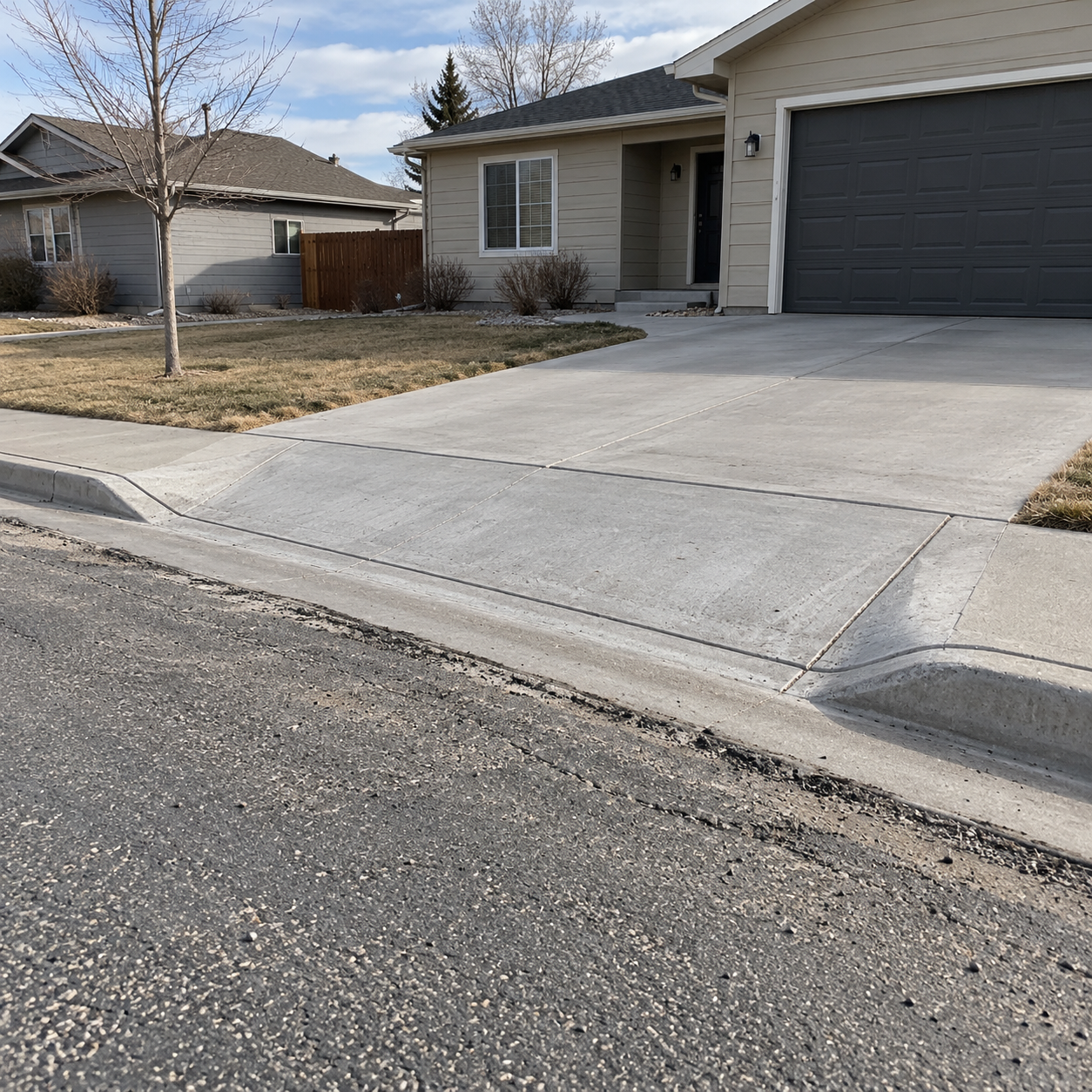
Finished curb cut and concrete driveway approach meeting a Casper, Wyoming residential street

A new concrete driveway in Casper, Wyoming is one of the bigger exterior investments a homeowner makes. The 2026 price tag depends on size, thickness, reinforcement, site conditions, and whether an old slab has to come out first. Online estimators give rough ranges, but Wyoming's climate, soils, and labor market all shift the numbers.


This guide covers 2026 planning ranges for the Casper area, what drives those numbers up or down, and the specific thickness and rebar choices that affect both initial cost and long-term lifespan. It also walks through the real tradeoff between a new pour and a full replacement, which rarely cost the same even on the same lot.


Use the ranges to size up a budget and read bids with context. Figures below are planning estimates, not quotes. If a bid in hand sits way outside the ranges shown, that is a signal to ask more questions.
Casper Concrete Driveway Cost Ranges (2026)


The table below reflects 2026 planning estimates for standard residential driveways in the Casper area. Figures draw on national contractor cost data, adjusted upward at the range boundaries for Wyoming labor and the deeper base prep required by the local 3-foot frost line.


Casper Concrete Driveway Cost Table (2026)

Project Type Per Square Foot Typical Total (500 sq ft) What's Included
New 4-inch driveway (standard broom finish) $7 to $14 $3,500 to $7,000 Site prep, forms, 4-inch pour, basic mesh, cure
New 6-inch driveway (heavy-duty with #3 rebar) $10 to $18 $5,000 to $9,000 Deeper base, 6-inch pour, #3 rebar grid, cure
Old driveway removal and haul-away $3 to $6 $1,500 to $3,000 Breakup, load-out, haul, and disposal fees
Full replacement (removal plus new 4-inch) $10 to $20 $5,000 to $10,000 Removal plus new 4-inch pour, standard scope

These are planning ranges, not quotes. Casper lot conditions push estimates up or down more than most buyers expect.

What Drives Concrete Driveway Cost in Casper


Three factors shape the per-square-foot number more than anything else: size, site conditions, and timing. Each of them can swing a bid by thousands of dollars on the same lot.


Square Footage and Shape


Larger driveways spread fixed costs across more area, which drops the per-square-foot rate. Odd shapes with curves, flared aprons, or elevation changes add forming labor and push the number back up.


Cost factors tied to layout:


  • Rectangular driveways are the most economical to form
  • Curved or flared edges add forming time
  • Multiple elevation changes require more grading
  • Narrow strips price higher per square foot


Subgrade and Site Prep


Casper's soils vary lot by lot, and site prep is where hidden cost lives. A clean, level, well-draining base speeds the job; problem soils and old materials slow it down.


Common subgrade cost drivers:


  • Expansive clays that need extra gravel base
  • Sloped lots requiring cut and fill
  • Removal of tree roots or buried debris
  • Tight access that limits equipment choice
  • Drainage work to prevent future heaving


Season and Scheduling


Casper's reliable pouring window is short, which affects both availability and pricing. Winter pours require cold-weather protection that adds real cost. Our guide on the best time to pour concrete in Casper walks through the full seasonal window.


Timing impacts:


  • Peak summer bookings fill 6 to 10 weeks ahead
  • Off-season pours carry cold-weather premiums
  • Weather delays can shift start dates in spring and fall
READY TO PRICE YOUR DRIVEWAY? START HERE

Standard vs Heavy-Duty: Thickness and Rebar


Thickness and reinforcement decide both the price and the lifespan. The right spec depends on what will drive and park on the slab over the next 25 years. The ACI 330 Guide for the Design and Construction of Concrete Parking Lots covers these choices in depth.


4-Inch Driveways for Passenger Vehicles


A 4-inch slab is the standard for cars, SUVs, and light pickups. It handles daily residential traffic reliably when the base is prepared correctly and the mix carries proper air entrainment for freeze-thaw.


Typical 4-inch scope:


  • Compacted gravel base at least 4 inches deep
  • 3,500 to 4,000 psi mix with 5 to 7 percent air
  • Wire mesh or fiber reinforcement
  • Standard broom finish


6-Inch Driveways for Trucks, RVs, and Trailers


Heavy vehicles need a thicker slab and real steel. Six inches with a rebar grid roughly doubles the structural capacity and prevents cracking from point loads under loaded trailers or dually tires.


Typical 6-inch scope:


  • 6 to 8 inches of compacted gravel base
  • 4,000 psi mix with air entrainment
  • #3 rebar on 18-inch centers
  • Thicker edges at wheel entry points

Rebar, Wire Mesh, and Fiber Options


Reinforcement controls how a slab cracks when it does crack. Portland Cement Association guidance on residential concrete covers mix and reinforcement choices in detail.


Reinforcement at a glance:


  • Fiber mesh: lowest cost, light passenger use
  • Wire mesh: moderate cost, standard for 4-inch
  • #3 rebar: best structural performance, standard for heavy use

New Driveway vs Replacement: Which Makes Sense


Replacement runs 30 to 50 percent more than a new pour on an empty lot since the old slab has to come out first. Replacement still beats repair when cracks are widening, scaling has reached aggregate, or settlement has created drainage issues.


Lean toward replacement when you see:


  • Cracks wider than 1/4 inch with vertical displacement
  • Multiple sunken sections pointing to subgrade failure
  • Surface scaling that reaches the aggregate
  • Drainage pooling that causes recurring damage


Repair makes sense when you see:


  • Hairline cracks with no displacement
  • Isolated spalls that can be patched cleanly
  • Surface wear without structural issues

Permits, Curb Cuts, and the Fine Print


The driveway itself usually falls under Casper's 30-inch flatwork exemption and does not require a building permit. The cut in the curb at the street does. Our full concrete permit rules in Casper article covers the city vs county split, the curb cut process, and the $5,000 surety bond for right-of-way work.


Most contractors pull the curb cut permit as part of scope. If your bid does not mention it, ask who is responsible.


Frequently Asked Questions

  • How long does a concrete driveway last in Casper?

    A properly built concrete driveway lasts 25 to 40 years here. Lifespan depends on mix design, subgrade prep, air entrainment, and whether deicing salts are used. A quality sealer every 3 to 5 years extends that life significantly.

  • How much is a concrete driveway in Casper versus asphalt?

    Concrete typically costs 30 to 50 percent more upfront than asphalt but lasts roughly twice as long. Asphalt also needs resealing every 2 to 3 years in Wyoming's climate, while concrete needs far less frequent maintenance.

  • Can I pay for my driveway in stages?

    Most Casper contractors offer deposit plus progress payments on larger projects. A typical structure is 25 to 33 percent at contract signing, a progress payment at form inspection, and final balance after walkthrough.

  • Does a concrete driveway add value to a Casper home?

    Yes. A new driveway returns 50 to 75 percent of its cost at resale and improves curb appeal. Replacement of a visibly damaged driveway returns higher than a cosmetic upgrade of a working one.

Pricing Your Casper Driveway With Confidence


The sticker number matters, but the scope behind it matters more. A $7 bid and a $14 bid are rarely pricing the same work. Thickness, rebar, base depth, curb cut handling, and warranty all shift the real value.


Full Contact Concrete has been pouring and replacing driveways across Casper for 14 years. Contact us for a free estimate on your Casper concrete driveway installation and repair project.

REQUEST A FREE ESTIMATE CALL US NOW
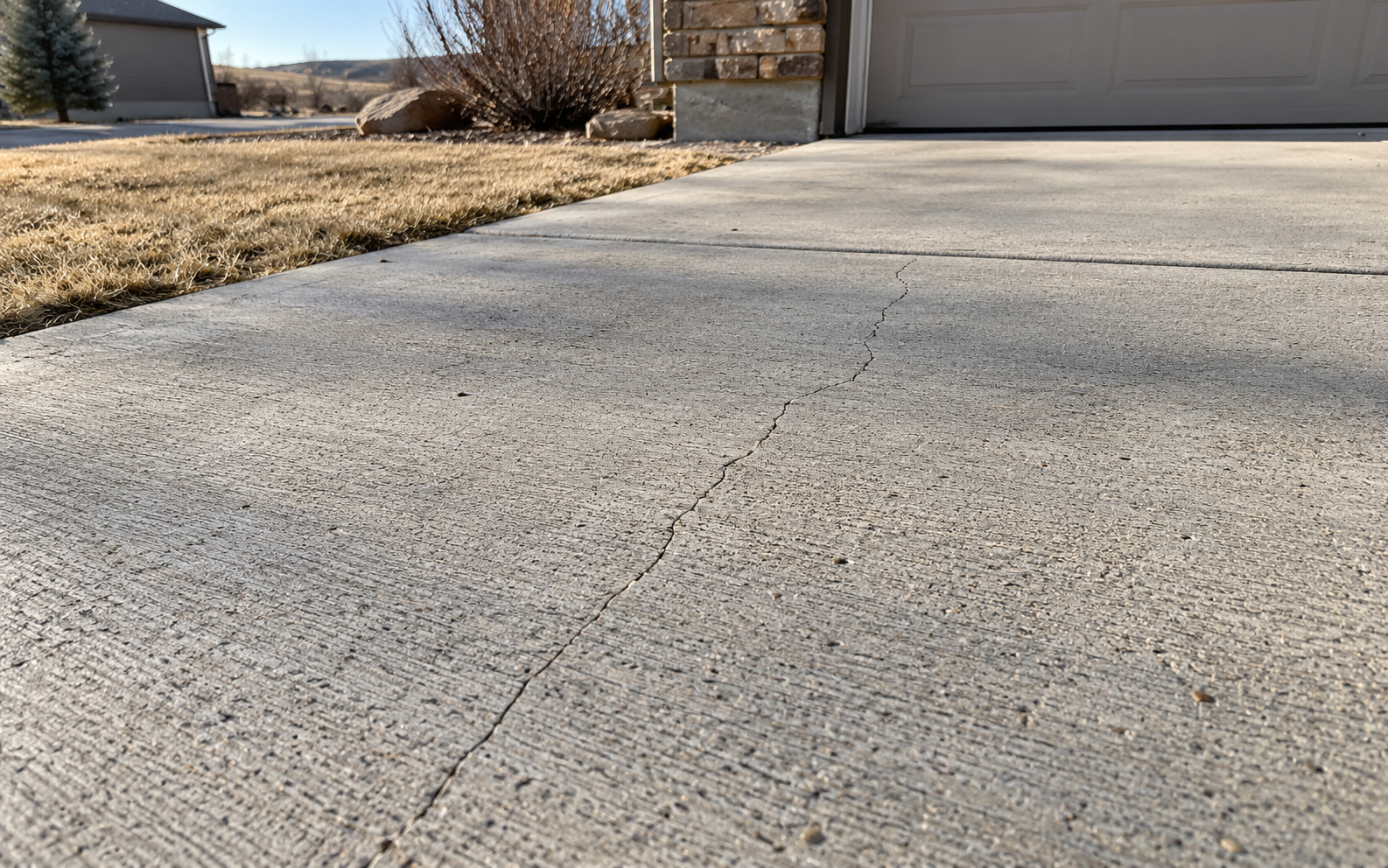
Hairline shrinkage crack running across a residential concrete driveway in Casper, Wyoming
October 5, 2026
Why does concrete crack in Casper, WY? Learn the local causes behind common foundation, driveway, and patio cracks, plus how to prevent them from forming.
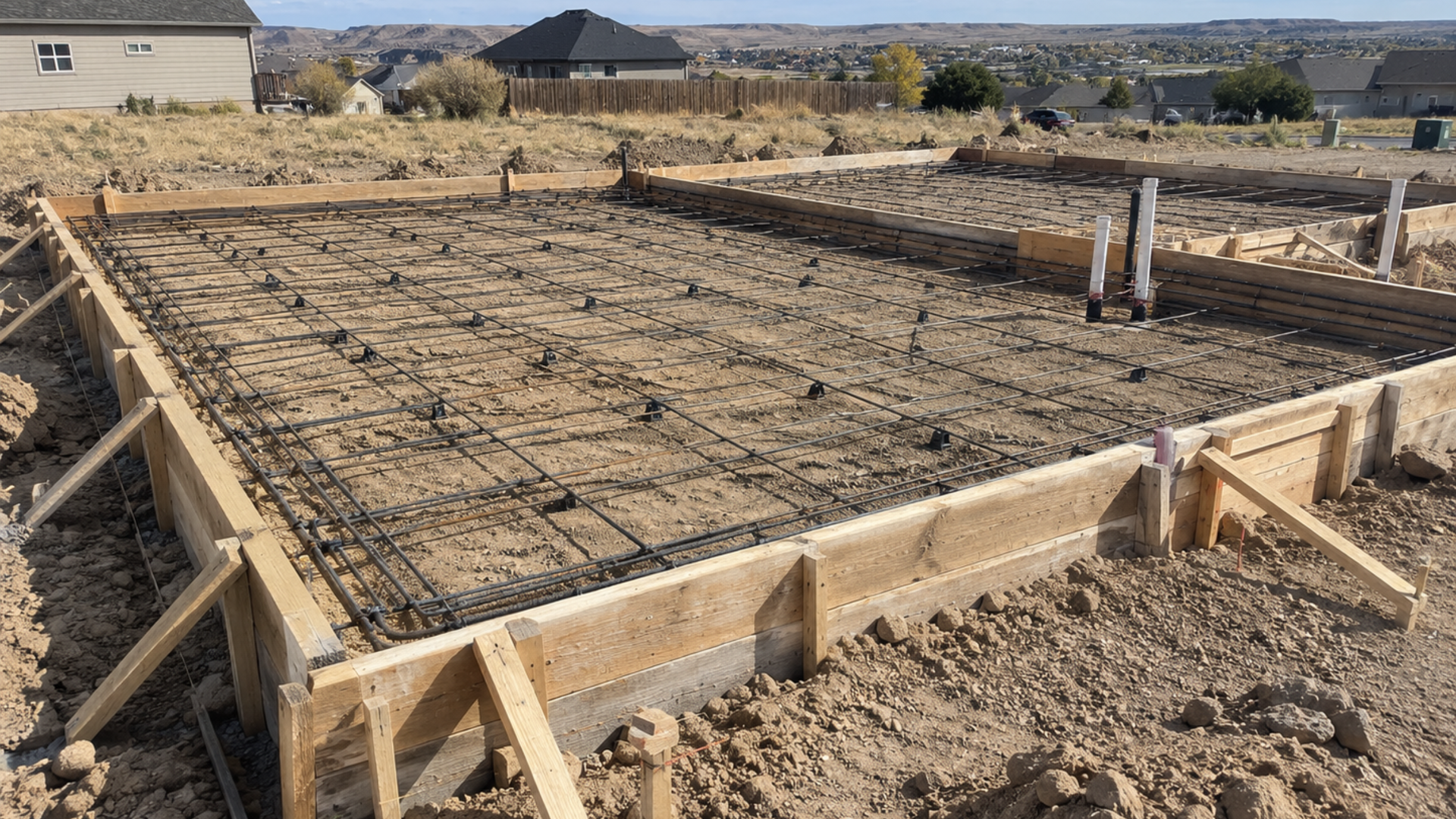
Concrete foundation forms and rebar staged for pour in Casper, Wyoming with residential lot
September 23, 2026
Planning a new foundation in Casper, WY? Compare full basement, crawl space, and slab-on-grade costs, plus permits, timing, and frost depth requirements.
Finished concrete walkway leading to a residential home in Casper Wyoming
August 28, 2026
Planning a concrete walkway in Casper, WY? Learn 2026 costs, design options, permit rules, finish choices, and what can affect your final estimate.
Wide shot of an active concrete jobsite in a Casper residential neighborhood
August 17, 2026
Do you need a permit for concrete work in Casper, WY? Full Contact Concrete covers city vs county rules, curb cut permits, exemptions, fees, and fines.
Winter concrete pour in Casper, Wyoming protected by insulating blankets and heated enclosure under
July 30, 2026
Can you pour concrete in winter in Casper, WY? Full Contact Concrete explains the physics, ACI 306 protection, cost impact, and when to wait for spring.
Freshly poured concrete driveway in Casper, Wyoming with mountain ridgeline in the background
July 17, 2026
Discover the best time to pour concrete in Casper, WY. Learn seasonal timing, ACI standards, and local wind and weather factors from Full Contact Concrete.
Full Contact Concrete crew completing a residential concrete project in Wyoming
June 1, 2026
Learn about Full Contact Concrete and our driveway, patio, foundation, slab, sidewalk, and decorative concrete services across Wyoming.